I stumbled over a quote from President Boyd K. Packer the other day that set off a series of thoughts about
absolutism and Mormons.
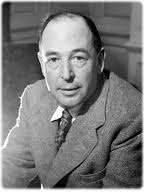 |
| C.S. Lewis |
There was also another statement Packer's brought to mind. I will quote first from C.S. Lewis: "We have not yet had the slightest notion of the tremendous thing He means to make of us." (
Mere Christianity, 205). Because He can only do His thing in us on His terms, we will invariably encounter just how absolute the sanctification process really is.
Anyone with even a cursory testimony of the truthfulness of
The Book of Mormon and the other standard works as divinely inspired scripture must come to an inescapable conclusion without much effort that the book is filled with absolutisms. (The emphasis in italics below is mine).
Here's an example: "Zion
cannot be built up unless it is by the principles of the law of the celestial kingdom;
otherwise I cannot receive her unto myself." (
D&C 105:5).
Another: "And
no unclean thing can enter into his kingdom; therefore
nothing entereth into his rest save it be those who have washed their garments in my blood, because of their faith, and the repentance of
all their sins, and their faithfulness unto the end." (
3 Nephi 27:19).
And another: "And he commandeth
all men that they must repent, and be baptized in his name, having
perfect faith in the Holy One of Israel,
or they cannot be saved in the kingdom of God. And
if they will not repent and believe in his name, and be baptized in his name, and endure to the end, they must be damned; for the Lord God, the Holy One of Israel, has spoken it." (
2 Nephi 9:23-24).
Yet another:
"And he that believeth and is baptized shall be saved, and he that believeth not, and is not baptized, shall be damned." (
D&C 112:29).
These are but four examples (there are a myriad more). It's enough to make the point. The voice of the Lord comes to us in
absolute terms. How it comes to us takes many forms -- through the whisperings of the Spirit, through reading the Word, through inspired servants and leaders, and through our trusted loved ones who are deeply invested in our success and happiness.
The Lord Himself as the
absolute choice as Savior and Redeemer is fixed and immovable. "And the Lord said: Whom shall I send? And one answered like unto the Son of Man: Here am I, send me. And another answered and said: Here am I, send me. And the Lord said:
I will send the first." (
Abraham 3:27). The debate is interesting, whether or not another could have stepped up as the "designated hitter" to replace the Savior had He faltered and withdrawn in Gethsemane and failed to move on to Golgotha in the culmination of His agony, but that's all it is -- a futile and meaningless debate. How can you subscribe to the notion of a "backup plan" being necessary if you believe our Father in Heaven
really absolutely knows the end from the beginning?
The scriptures tell us: "And moreover, I say unto you, that there shall be
no other name given nor any other way nor means whereby salvation can come unto the children of men, only in and through the name of Christ, the Lord Omnipotent." (
Mosiah 3:17).
"And under this head [Jesus Christ] ye are made free and
there is no other head whereby ye can be made free. There is no other name given whereby salvation cometh; therefore, I would that ye should take upon you the name of Christ, all you that have entered into the covenant with God that ye should be obedient unto the end of your lives." (
Mosiah 5:8).
"I say unto you, can ye think of being saved when you have yielded yourselves to become subjects to the devil? I say unto you, ye will know at that day that ye
cannot be saved; for
there can no man be saved except his garments are washed white; yea, his garments must be purified until they are
cleansed from all stain, through the blood of him of whom it has been spoken by our fathers, who should come to redeem his people from their sins." (
Alma 5:20-21).
"And I heard a voice from the Father, saying, Yea, the words of my Beloved are true and faithful. He that endureth to the end, the same shall be saved. And now, my beloved brethren,
I know by this that unless a man shall endure to the end, in following the example of the Son of the living God, he cannot be saved." (
2 Nephi 31:15-16).
"For behold, the Spirit of Christ is given to
every man, that he may know good from evil; wherefore, I show unto you the way to judge; for
every thing which inviteth to do good, and to persuade to believe in Christ, is sent forth by the power and gift of Christ; wherefore ye may know with a
perfect knowledge it is of God. But
whatsoever thing persuadeth men to do evil, and believe not in Christ, and deny him, and serve not God, then ye may know with a
perfect knowledge it is of the devil; for after this manner doth the devil work, for
he persuadeth no man to do good, no, not one; neither do his angels; neither do they who subject themselves unto him." (
Moroni 7:16-17).
"Therefore,
whoso repenteth and cometh unto me as a little child, him will I receive, for of such is the kingdom of God. Behold, for such I have laid down my life, and have taken it up again; therefore repent, and come unto me
ye ends of the earth, and
be saved."
(3 Nephi 22).
I have written about the definition of salvation before. In the scriptures it is clear we must
do something to be
saved. It is no mere profession of faith in Christ that saves us. We must add to our faith repentance, baptism by immersion for the remission of all our sins, and receive the gift of the Holy Ghost; then we must
endure and
act upon that faith until the end of our mortal life to be saved.
This is all
very absolute language, isn't it? There are many authors in today's politically correct world who assiduously avoid the use of absolute language. They would never think of using words like absolute, never, forever, cannot, always, and nobody or everybody. Here's an example of politically correct thinking and writing, even going to the extreme of criticizing the use of such language:
"Overgeneralization creates a shrinking universe in which more and more absolute conclusions make life increasingly confining. You should not take one fact or event and make a general rule out of it. If you have a tendency to overgeneralize, you may interpret one bad experience at an Italian restaurant to mean that all Italian food is bad. Or maybe an art teacher in high school told you that you likely had no talent for watercolor, so you never attempted to express yourself again creatively.
"Clues that you are overgeneralizing are words like never, all, every, everyone, nobody, or always. These kinds of absolute words are your self-critic’s way of closing the door of possibility, inhibiting your access to change or growth." (Excerpted and paraphrased from
The Self-Esteem Companion [1999] by Matthew McKay, Patrick Fanning, Carole Honeychurch, and Catharine Sutker).
There is one fact in the universe that creates the general rule that applies to all: The atoning sacrifice of the Only Begotten Son. So one begins to understand why the use of absolute language seems to be so reprehensible in today's world. When priesthood leaders align themselves and seek to align their congregations to the language of Heavenly Father and His Son, Jesus Christ, they are often criticized because the use of absolute language just isn't "sensitive," or "progressive," or "growth enabling." Well, you decide. Can you submit to the Creator of the universe, the Alpha and Omega, the Savior and Redeemer of all mankind as one who has descended below all things and has risen above all things to save us? Or do you reject divinely-inspired absolute thinking, writing and revelation?
 |
| President Boyd K. Packer |
All of this is merely preamble. Here is President Packer's statement:
"I seldom use the word absolute. It seldom fits. I use it now -- twice. Because of the Fall, the Atonement was absolutely essential for resurrection to proceed and overcome mortal death. The Atonement was absolutely essential as the means for men to cleanse themselves from sin and overcome the second death, which is the spiritual death, which is the separation from our Father in Heaven." (
Let Not Your Heart Be Troubled, 79, emphasis mine).
I heard Richard Holzapfel once say that when writing about gospel topics faculty members at BYU are cautioned to let the General Authorities make use of the superlative language, not them. For instance, when one says, "This is
the most important something or other," better for those statements to come from prophets rather than professors.
But one thing is clear to me. Heavenly Father and Jesus Christ make liberal use of absolute language, and when General Authorities and other priesthood leaders make use of that language in their speeches and sermons, we should be paying attention. Too often, however, we fail to discern between the man and the mantle, assuming we are listening to the man rather than giving obeisance to the inspired priesthood mantle he wears.
 |
| Elder Lawrence E. Corbridge |
Elder Lawrence E. Corbridge said it well: Jesus Christ is the Way. He is Light and Life, Bread and Water, the Beginning and the End, the Resurrection and the Life, the Savior of the world, the Truth, and the Way.
There is only one way to happiness and fulfillment. He is the Way.
Every other way, any other way, whatever other way, is foolishness.
He offers a well of living water. Either we drink and never thirst more, or we don’t and foolishly remain thirsty still.
He is the Bread of Life. Either we eat and hunger no more, or we don’t and foolishly remain weak and hungry still.
He is the Light of the World. Either we follow Him and see clearly, or we don’t and foolishly remain blind and in darkness still.
He is the Resurrection and the Life. He said, “The words that I speak unto you, they are spirit, and they are life.”
(John 6:63).
Either we learn of Him and have life more abundantly, (John 10:10) or we don’t and foolishly remain dead still.
He is the Savior of the world. Either we accept the blessings of His Atonement and are made clean and pure, worthy to have His Spirit, or we don’t and foolishly remain alone and filthy still.
He is the Way. (Emphasis is mine above).
As a bishop giving counsel one day in my office, I felt impressed to share this scripture with one who was shedding buckets of tears because of her sins with little or no hope in sight: ". . . repentance is unto them that are under condemnation [those who have reached the age of accountability at age eight] and under the curse of a broken law. And the first fruits of repentance is baptism; and baptism cometh by faith unto the fulfilling the commandments; and the fulfilling the commandments bringeth remission of sins; And the remission of sins bringeth meekness, and lowliness of heart; and because of meekness and lowliness of heart cometh the visitation of the Holy Ghost,
which Comforter filleth with hope and perfect love, which love endureth by diligence unto prayer, until the end shall come, when all the saints shall dwell with God." (
Moroni 8:24-26).
Her drooping head came up out of her hands, her tears diminished, she began to walk eventually with more confidence she could be forgiven, all was not lost, she could look forward in faith, reset herself and walk in a newness of life. Even the most grievous sins can be forgiven, but only upon the conditions Heavenly Father has set in place. Those conditions involve the individual, the Church through its judges in Israel, and God. All three elements must and can be addressed by the sinner who can be healed ultimately by the application of the absolute truths God has revealed. God
can and will forgive, the Church
can and will forgive, and the individual
can and eventually will forgive himself.
When we are feeling crushed beneath what we perceive may be a violated absolute law of the gospel, and when we reject the nature of the absolute requirements prescribed by the scriptures, we have simply not gone far enough down the path of true repentance. When sitting in a class once under the tutelage of a master teacher who was asking how salvation is obtained, a bright student suggested an answer from a scriptural source, and the teacher merely suggested, "Keep reading." The answer had not been complete because the student was omitting the
absolute language, the part about being "cast off" (in other places "damned") if the absolute conditions prescribed in the passage were not applied.
Here's the passage: ". . . Marvel not that
all mankind, yea,
men and women,
all nations, kindreds, tongues and people, must be born again; yea, born of God,
changed from their carnal and fallen state, to a state of righteousness, being
redeemed of God, becoming his sons and daughters; And thus they become
new creatures; and
unless they do this, they can in nowise inherit the kingdom of God. I say unto you,
unless this be the case,
they must be cast off; and this I know, because I was like to be cast off." (
Mosiah 27:25-27).
It seems to destroy some people who have sinned, to think somehow they can never qualify for eternal life and exaltation because of their sins. They say, "I can never be worthy enough to. . ." Pitted against such absolute, authoritarian, heavy-handed expectations, they believe, there can be no hope. However, properly understood, absolutism is the language of God, His Son, and His prophets. When we align and put our faith in the Great I AM, who is "the way, the truth, and the life" (see
John 14:6), we may rest assured
moral absolutism is the requirement of heaven and that
"no unclean thing" includes us.
Never believe Satan's lie that you are left alone in your sins to suffer.
All we have to do is submit and
align ourselves, then
everything is possible in changing.
 |
| Joseph Smith |
Joseph Smith reasoned this way:
"But if this life is all, then why this constant toiling, why this continual warfare, and why this unceasing trouble? But this life is not all; the voice of
reason, the language of
inspiration, and the Spirit of the living God, our Creator, teaches us, as we hold the record of truth in our hands, that this is not the case, that this is not so; for, the heavens declare the glory of a God, and the firmament showeth His handiwork; and a moment's reflection is sufficient to teach every man of common intelligence, that all these are not the mere productions of
chance, nor could they be supported by any power less than an Almighty hand; and He that can mark the power of Omnipotence, inscribed upon the heavens, can also see God's own handwriting in the sacred volume: and
he who reads it oftenest will like it best, and he who is acquainted with it, will know the hand wherever he can see it; and when once discovered, it will not only receive an acknowledgment, but an obedience to all its heavenly precepts. For a moment reflect: what could have been the purpose of our Father in giving to us a law? Was it that it might be obeyed, or disobeyed? And think further, too, not only of the propriety, but of the importance of attending to His laws in every particular. If, then, there is an importance in this respect, is there not a responsibility of great weight resting upon those who are called to declare these truths to men? Were we capable of laying any thing before you as a just comparison, we would cheerfully do it; but in this our ability fails, and we are inclined to think that man is unable, without assistance beyond what has been given to those before, of expressing in words the greatness of this important subject. We can only say, that if an anticipation of the joys of the celestial glory, as witnessed to the hearts of the humble is not sufficient, we will leave to yourselves the result of your own diligence; for God ere long, will call all His servants before Him, and there from His own hand they will receive a just recompense and a righteous reward for all their labors." (
TPJS, 56).
We may be certain in the language of heaven that ample provision has been made for failure in the perfect plan. In fact, "failure" at the outset in the Garden of Eden put us on the path back to Heavenly Father.
The
absolute necessity for a Savior was introduced from that day forward.
Absolute conditions for salvation were set forth. Prophets were called with
absolute authority from heaven to teach and preach the gospel and to administer in the ordinances thereof.
Absolute truth was sent forth, obedience to which would result in
absolute absolution and freedom from stain, enabling
absolute grace, salvation, exaltation and in time
absolute perfection.
So next time President Packer or any other priesthood leader uses absolute language to describe the path one must take to be saved, listen up. Absolute language is the language of the Gods, and be forewarned it is
not, worlds without end, politically correct.
It is, however, enabling and ennobling -- it is the
only true path leading to change, growth, progress and exaltation. And there is
no other way.


