Showing posts with label jesus christ. Show all posts

Tuesday, December 10, 2024

Shepherds at the Gate of Christmas

Christmas always reminds me of the years I served as a bishop. I was an eyewitness then to the lovingkindness of my ward members for one another. As a steward of the sacred fast offering funds donated to the Church, a bishop is often the one who stands in the breach when all other help flees from those most in need.

To announce His birth as the Shepherd of Israel, the angel appeared first to shepherds in the field keeping watch over their flock by night. Today’s modern under-shepherds are the bishops of Israel who succor and nurture the sheep in the wide expanse of this world.

Fast offerings are donated monthly on the first Sunday of each month. We observe the fast for a twenty-four hour period beginning on Saturday. The cost of the two meals skipped is suggested as an offering to assist the poor and the needy who live among us. The bishops of the Church are encouraged to “seek out” the poor and needy, and not to wait until they land on his doorstep. It is a sobering and humbling assignment, as any bishop will attest.

It seems the Christmas season brings more stories as the years unfold. Of course, the best stories never are told. They remain the sacred and secret domain of bishops and their flocks. But this past week (I wrote this account in 2011) another story is added to my personal lexicon. I share it here, preserving the anonymity of those involved.

I had a phone call from a former co-worker with whom I hadn’t spoken in months. He said, “I was speaking with someone the other day who suggested I call you. I need some of your wisdom. I’ve gotten myself into a situation, and I need your help. Could we meet for breakfast tomorrow?”

At breakfast my friend poured out a story I had not anticipated. He and his wife had encountered some health issues since we had last spoken. They had gotten behind on their bills, and he had taken out some payday loans to meet their obligations. He had not told his wife, not wanting to alarm her. The exorbitant interest payments were now consuming all their income, and the rent was due the following day. They had just moved from one distant city to another nearer his work, and had done some painting to enable themselves to get into a new rental home. Now the first month’s rent was due and they had no way to pay it.

We discussed possible sources of help. He had consulted a bankruptcy attorney last year, but they hadn’t taken any steps in that direction. His sister, a CPA, was the executor of his mother’s estate, but he feared she would treat him harshly when she heard the predicament he was in. There seemed to be no options. He had requested a consolidation loan from his bank, but they had declined his request because his credit had been impaired.

I suggested three alternatives to explore. 1) Re-connect with the bankruptcy attorney to see if she could help stop the freight train of the escalating interest payments due to the payday lenders; 2) call his sister to see if there might be any way she could think of to help him, and 3) call your new bishop. I also recommended that he not hide their situation any longer from his wife.

My friend reminded me he was not a member of the Church, but my response was, “Everyone in this world has a bishop, most of them just haven’t met each other yet. Your wife was a member of the Church at one time, wasn’t she?” He confirmed she had been. But he hastened to add he had been a lay minister in another church before he had moved to Utah and met his wife. He had to give up his ministry to accept a job here, and he wouldn’t even know how or who he should contact.

I took a moment to explain how to find his bishop through the Church’s website. (It's much easier today than when I was writing this account in 2011). He wrote down my instructions carefully. I had a chance to explain that like him, bishops in the Church are lay ministers, called for a period of time by their leaders from among their congregations, then released to go back into the ranks from which they had been called. I explained a little about fast offerings, and the purposes for which bishops may use those member donations as they feel inspired to do so. I told him without even knowing who he was, I was certain his bishop would stand ready and able with resources to assist him.

As we parted, I was gripped with a moment of fear. What had I just done? I didn’t even know who his bishop was! How could I make such an audacious promise and assume it would play out smoothly the way I hoped it would?

Then the Spirit whispered to me, chiding me a little and speaking peace to my heart, “You were a bishop once, David. You know how I work, don’t you? Have a little faith.”

Later in the day, I finally had a chance to check my voicemail. There was a message from my friend. He said he had done as I had suggested, found his new ward and his bishop. He had called the bishop, who heard his story with an empathetic ear, and suggested that they meet that morning at his office at the ward building. In part, he said to me in the message, “I went over my scenario with him, and he’s going to help me with the rent. I’m so glad I came to you. Thank you for listening to me and for your wisdom and your advice.”

Honestly, the Lord makes us all smarter than we are if we listen to His spirit directing us and we act on those impressions. He said at the end of his message, “I should know God is in charge. He’s proven it again to me this morning. Thank you.” Our part is to humble ourselves. He manifests His love for each of His children without judgment or reservation.

I thought of pennies, nickels and dollars that comprise the monthly fast offerings of the faithful saints, and I felt to give thanks once again for those who give in the same spirit our Father in Heaven gives. It is all about His love for His children.

I echo with heartfelt gratitude the words of President Gordon B. Hinckley, who offered these insights about bishops in a General Conference address (https://www.churchofjesuschrist.org/study/general-conference/1999/04/the-shepherds-of-the-flock?lang=eng#p29):

“I stand in humble gratitude and respect and admiration for the bishops of this Church. In the most dire of circumstances, I watched them in La Lima, Honduras. I spoke with them, shook their hands, loved them. How thankful I am for these men who, without regard for their own comfort, give of their time, of their wisdom, of their inspiration in presiding over our wards throughout the world. They receive no compensation other than the love of their people. There is no rest for them on the Sabbath, nor very much at other times. They are the ones closest to the people, best acquainted with their needs and circumstances.”

The requirements of their office are today as they were in the days of Paul, who wrote to Timothy:

A bishop then must be blameless, the husband of one wife, vigilant, sober, of good behaviour, given to hospitality, apt to teach;

Not given to wine, no striker [that is, not a bully or a violent person], … not a brawler, not covetous (1 Timothy 3:2–3).

In his letter to Titus, Paul adds that “a bishop must be blameless, as the steward of God; … Holding fast the faithful word as he hath been taught, that he may be able by sound doctrine both to exhort and to convince the gainsayers” (Titus 1:7, 9).

I suspect there will be a “sequel” to this formative introduction between my friend and his new bishop. How marvelous that a bishop stands ready to help the constituency of his flock, even those who have not as yet been “branded” as one of his own…

For, in fact, we are all His.

Sometimes we are the recipients, other times we are the givers, but He always ministers to our needs through His under-shepherds, the bishops of Israel.

Today, somewhere in Sunnyvale, California, Phil Sharp was ordained as a new bishop, the first to serve in our family’s next generation. I know he will be blessed as the mantle rests upon his shoulders and he takes up his new role as a shepherd in Israel to the flock where he is assigned. (Just this weekend in 2024, Phil was sustained as a counselor in their stake presidency in Bloomfield, Colorado, where he continues to bless many lives through his consecrated service).

The gates of Christmas are flung open wide for all who will come to enter therein… 

Sunday, March 2, 2014

"All Men Are Created Equal" But How?

We belong to a marvelous Church in which we all get invitations from time to time to teach, lead, participate and grow and learn.  We are all amateurs, but we do receive incredible instruction on how to do things better.

David M. McConkie
Here's a sampling of the instruction teachers in the Church have received, as recently as last General Conference from David M. McConkie, 1st Counselor in the Sunday School General Presidency. He titled his remarks "Teaching with the Power and Authority of God". Seriously, if we aren't teaching this way, why bother?

"First, it means that you are on the Lord’s errand. You are His agent, and you are authorized and commissioned to represent Him and to act on His behalf. As His agent, you are entitled to His help. You must ask yourself, 'What would the Savior say if He were teaching my class today, and how would He say it?' You must then do likewise.

"This responsibility may cause some to feel inadequate or even somewhat fearful. The pathway is not difficult. The Lord has provided the way for every worthy Latter-day Saint to teach in the Savior’s way.

"Second, you are called to preach the gospel of Jesus Christ. You must not teach your own ideas or philosophy, even mingled with scriptures. The gospel is 'the power of God unto salvation,'  (Romans 1:16) and it is only through the gospel that we are saved.

"Third, you are commanded to teach the principles of the gospel as they are found in the standard works of the Church, to teach the words of modern-day apostles and prophets, and to teach that which is taught you by the Holy Ghost." (emphasis mine).

I wonder if we haven't all participated in lessons in the Church almost near-adoration is expressed for the great strides Satan is making in the last days to undermine the gospel. Little or no inspiration from the God of Heaven is to be found whenever we congratulate Satan on his success among us. Oh, and by the way, does ANYONE know what will happen thirty years from now? Can we say for a fact that if the trends continue, we will be completely apostate and Satan will have won? When we are so determined to bear testimony about the works of Satan, and when we ignore the word of God, how can we expect to be edified together in a meeting like that? (See D&C 84:110).

This world is filled with sophistry, even in our chapels of worship, and continually we are reminded of the false doctrines abounding in society. It's as though we would give credence to those who would assert atheism equates to belief in God. Let's give everyone equal time, even if they stand in opposition to the revealed word of God. Being the true Christians we are, so the reasoning goes, we must grant equal time for the devil's advocates. Call me whatever you like, but I reject that idea.

I reflected during Sunday School hour about how contorted this idea of "equality" has become since the founding of America. When the founders wrote in our core document, the Declaration of Independence, and they said, "We hold these truths to be self-evident, that all men are created equal. . . ,” what did they have in mind? It would be fool-hearty indeed to suggest they meant all men are equal in all things, and yet that seems to be the direction our rudderless godless society has drifted in recent years.

Today's sophists would have us believe that even in matters of marriage there must be equality - that a marriage between members of the same sex must be defined in the law as being equal to a marriage between members of the opposite sex. There is a true doctrine associated with equality between the sexes, and you'll find it here.

Do you suppose the Founders meant all men and women should be born into the same social stratus? Do you think they meant all men and women should have equal sized estates and financial acuity? Such interpretations fly in the face of even the most casual observations of the human condition. Even the founders, drawing upon their own life experiences, would have never made a declaration so simplistic and absurd on its face. It's illogical. Each of the Founders came from diverse backgrounds, opportunities for education and vastly differing degrees of success in the accumulation of varying degrees of wealth, position and influence.

If you accept that everyone should be equal in all things including marriage, would you also assert the Founders meant all men and women were equally talented in all things? Would all people have equal musical talents, writing abilities, intellectual gifts, all dispensed with equality for all? Would there be a state religion where all men and women had the identical belief about the doctrine of Christ? Why not? If we make them equal in marriage status, why wouldn't we make them equal in EVERYTHING else? Isn't that what God would do? Wouldn't that be fair and equal? And then the final step, the coup d'etat, putting the final nail in the coffin of moral agency and representative republic - let's make the state the God of equality and justice for all. All that final step requires is a benevolent dictator, and voila - a new King is crowned.

Would any of the Founders have asserted the civil government should be delegated the duty to make certain all this was accomplished with the even-handed judgment of a King Solomon? Not on your life! Your own human experience, whatever it is, would deny these assertions on their face. They are idiotic ideas, aren't they? And yet we continue to give audience to all these false doctrines in the dedicated houses of worship where we meet each week. It is astounding to me!

Franklin, Adams, Jefferson drafting the
Declaration of Independence
My reading of what happened in the Continental Congress when all these inspired men from all the Colonies got together and agreed to sign the Declaration of Independence, is very different than what I am hearing all around me today. I would assert as forcefully as I know how that the Founders meaning in that statement suggests all men were created as equally accountable to God under God's Law. Easy to say, but how would you buttress that assertion? Here's another author who understands the principles involved.

Why would I suggest they were writing of equal accountability under God's Law? The simple answer is that words have meaning and the plainer the words, the easier it is to understand what words are meant to convey. Remember, we have not only the words of the Declaration of Independence, but many of the Founders continued to write and leave behind a rich legacy of their meaning and their interpretation of those words for us. Thomas Jefferson wrote these lines, sometimes forgotten in our emotional and misguided debates today from the first paragraph, which states:

Thomas Jefferson
“When in the Course of human events it becomes necessary for one people to dissolve the political bands which have connected them with another and to assume among the powers of the earth, the separate and equal station to which the Laws of Nature and of Nature’s God entitle them, a decent respect to the opinions of mankind requires that they should declare the causes which impel them to the separation.” (emphasis is mine).

In this opening paragraph, the Founders were setting before their readers a fundamental and universal truth that God's law would be their standard. Emphatically, they asserted citizens, but also all civil servants tasked with the work of the government, were accountable to "the Laws of Nature and of Nature's God." They apparently did not believe in separation of God and state. All we do, they asserted, was to be done in our interactions with one another under the all-seeing eye of God to whom we are all ultimately accountable.

Then later in the main body of the Declaration's text, they enumerated the egregious wrongs King George had inflicted upon them in violation of what? The Law of God. The colonists through their elected representatives made a compelling argument these violations by King George could no longer imbue him with their allegiance nor loyalty to his civil rule over them. King George, they remonstrated, had stepped out of his role as being subject to "the Laws of Nature and of Nature's God" and therefore they were justified in severing alliances with England and going their own way. It was a fundamental religious argument at the root of the Declaration of Independence.

Simply put, King George had moved so far away from all that was just and holy in God's Law, the colonists could not at once be under God's authority, accountable to Him and also to King George. The two were too far apart. Let's not forget how radical such an idea was in the hundreds of years before that time in England, when it was asserted the King was the Law of God on earth. England held inviolate the doctrine of "Rex Lex" - “the King is Law.” So misguided were they in those days they had come to construe passages like Romans 13 to assert that whatever the King did was what God had inspired him to do. Did you catch a comment Barack Obama made a couple of weeks ago, when he asserted those who supported the Democratic Party were "doing the work of God"? Barack "Rex Lex" Obama.

Samuel Rutherford
It would take centuries, but ultimately over the course of the 1600s, men like Samuel Rutherford began thinking in a correct way. Rutherford suggested a new interpretation he called "Lex Rex" - “the Law is King.” He put forth the idea there was only one God of Heaven to which men were accountable, and no King on earth could assert that claim to the throne. The fathers of the Reformation noticed from their studies of the Bible that all men are equally sinful before a righteous God and all men, even Kings, are equally accountable to the absolute Law of God. Along came King Charles I, who began imprisoning people without cause and tried dissolving Parliament. By then the people were wisened and took action. He was beheaded. Leaders would come along, Oliver Cromwell being one of many, who would explain King Charles I had violated the Law of God and exceeded his jurisdiction.

These are not just stodgy old stories without meaning and without application in our day. Indeed, they are as fresh as today's headlines. Our Founders were bold enough remind the world that God governs in the affairs of men. That fact alone helped them find the courage to defy the King who was a law breaker. God's Law. They were full of such faith and “firm reliance on the protection of Divine Providence” that they were not afraid to pledge their lives, fortunes, and sacred honor.

Joseph Smith
Rather than giving equal time to stupidity, especially in our houses of worship where we come for inspiration and edification on the Sabbath Day, let us herewith resolve to honor the legacy of our Founders and the Prophet of the Restoration. Let us promote and defend the truth that all men and women are equally accountable before God and His Word. Section 78 of the Doctrine and Covenants lays out the Lord's plan for making all men equal in earthly things through voluntary contributions, and that is something very different than government confiscating personal property through taxes then allocating in their all-wise interpretation of "equality".

Under God's Law, every man and woman is accountable to God’s Word “without respect of persons.” (Romans 2:11). That means there are no exceptions, no special dispensations for sinners, since we are all equally sinful under the same terms of salvation and acceptance of Jesus Christ as our Redeemer through His perfection and grace. (Moroni 10:32-33).

That's what it means to be equal in all things in God's eyes, not to have civil servants who become dictators and dispense equality as they happen to interpret its meaning for us.

Sunday, August 26, 2012

My Neil Armstrong Moment

Neil Armstrong, 1969
The day was July 20, 1969. A few months earlier I had returned from my mission to England. I had accepted a new calling as a tour guide on Temple Square. My assigned day was Sunday afternoon. It was one of those unforgettable days no one who was alive on Earth ever forgot. Like so many world-altering events, we never forgot where we were and what we were doing.

That day, I was conducting my usual tour on Temple Square, Utah's number one tourist attraction. In more recent years the Church migrated to using foreign sister missionaries from all over the world instead of returned missionaries like me. Smart move.

On that afternoon, about 100 people were following my lead around the Square. We entered the North Visitors Center, and we stopped at each painting representing scenes from the lives of the ancient Old Testament prophets. We wound our way up the circular ramp to the second floor. The rotunda is dominated by a replica of the famous Bertel Thorvaldsen statue of the Christus.

The walls in the circular room are a bird's eye view of the universe from the perspective of one standing on the Earth looking out into space. Most prominent on the wall is the nearest space object, the moon. As I was discussing Christ's pre-mortal role as the Creator, we were interrupted by a Church security man who informed the group that Neil Armstrong had just stepped out of the lunar module onto the surface of the moon. He was the first human being to set foot on moon. He was a relatively young man at age 38, and the world had eagerly anticipated that moment after witnessing the liftoff, the orbits and the soft landing of the lunar module.

As he exited the lunar module, his words were forever captured in his first statement, "That's one step for a man, one giant leap for mankind."

I was overcome with emotion as I thought about what had just happened. Neil Armstrong was an immediate American hero, but forever afterward until his death this weekend at age 82, he shunned the limelight of his celebrity.

What a marvelous achievement for those talented scientists, who had accepted the challenge of President John F. Kennedy to put a man on the moon before the end of the decade. The Sixties represent many things to many people, but for me that crowning achievement against a backdrop of unprecedented social upheaval was a fitting climax.

As great as that achievement by man represents our determination, our will and our ingenuity, however, think how it shrinks compared to the Creator who put all the stars and planets and moons in the night sky. . .

THAT was some achievement.

Sunday, June 24, 2012

The Witness More Powerful Than Sight


Jesus Christ by Chambers

Yesterday as I was researching something else, I stumbled onto a site I hadn't anticipated. There was a painting by an artist named Chambers that I recognized from many years ago. The first time I saw it was when I was in the office of President Harold B. Lee in the Church Office Building. That same print now hangs in my father's office at his home (the former home of President Lee). Several years ago I did some research and found a larger print in a Catholic bookstore and had it framed.

The rest of the story is there is an account President Lee preserved and glued to the back of the painting that may help clear up the speculations I saw on the site to which I made reference above. This is what President Lee attached to the back of the painting by Chambers:

"I have something that to me is a very personal and sacred experience. The late Samuel O. Bennion, who presided for many years down in the Central States Mission, and later became a member of the First Council of Seventy, came into my office one day and he showed me a picture of an artist's conception of the Savior, and he said, 'How do you like this representation of the Master?' Now, as we know, there was no photograph. Some folks dress up foolishly and think they are trying to make themselves look like the Savior today, and it is a rather ridiculous spectacle and I am sure the Lord would not be proud to be so represented. I said to him, 'I think that is marvelous,' because here was a face of strength. I have seen the pictures of Hoffman and sometimes He is almost pictured as an effeminate weak person and I never liked that portrayal, but here was one - He had eyes that were piercing, He had the kind of a look that could be stern, and yet I could see him tender towards a little child, taking the little child in His arms, and I said, 'that is the most wonderful representation I have ever seen. That is the way I picture the Savior in my mind.' And he said, 'I will get you one of those pictures.' And he said, 'I will tell you why that means so much to me. While I was presiding over the mission, the late Elder Orson F. Whitney, who was a member of the Quorum of the Twelve Apostles, and a close friend and an associate of President David O. McKay, was about that same stature, tall, handsome (some of you older folks will remember) and he said, as we toured the mission, Elder Whitney told me about a personal visitation he had had from his Lord, and he said, contrary to many people's description, the Savior was a large man, as tall or larger than I in stature, and he described him so accurately that it was fixed in my mind, and when I came back to conference I stopped in Chicago and went to the art gallery and there I asked to see all the artist's conceptions of how the Savior looked from what descriptions they had, and I came across this one by an artist by the name of Chambers, this came the nearest to the description of Orson F. Whitney.'

"After several weeks there came this picture and that night Samuel O. Bennion passed away, and I suppose I still owe him for that picture that I have hanging on the wall just back of me. As I walk from one side of the room to the other, (you have seen great paintings do this), His eyes seem to follow. If I go to the right or to the left, He's there. It's as though I am feeling what I know is the truth, that we who occupy places of responsibility are under the constant surveillance of the Lord who is the head of this Church. President Joseph Fielding Smith isn't the head of this Church, the head of this Church is our Lord and Master, over the Church which bears His name. President Joesph Fielding Smith is the presiding authority, the earthly representative here upon the earth, but his is the Lord's Church and that is why it is called The Church of Jesus Christ of Latter-day Saints, in these latter days, and that is why we call it by that name." (President Harold B. Lee, during his tenure as the 1st Counselor in the First Presidency).

Jesus the Christ, by Del Parson
So that's the story about Harold B. Lee's association with this picture. Eventually, Del Parson would come along and produce a similar painting of Christ in a red robe, that is more commonly associated with the Church today. There are perhaps thousands of artists' representations of what Christ might look like, and many recent artists have contributed much to the body of work, Liz Lemon Swindle and Simon Dewey to name two.

Frequently, members of the Church speculate (there is no other word for it) on who among the General Authorities may have seen the Savior while they were living in mortality. It's nothing more than a parlor game, really, since those who may have had that experience will rarely disclose it, and those who haven't are prone to speculate. My experience with President Lee and others leads me to offer this counsel: Take their public statements and read them for the light and truth you may glean from them and go no further.

Clyde Williams did a masterful job of compiling the Teachings of Harold B. Lee several years ago. From that inspiring collection I have drawn a sampling of those expressions of testimony from President Lee. Please note how many times President Lee uses the expression, "a witness more powerful than sight:"

There has come to me in these last few days a deepening and reassuring faith. I can't leave this conference without saying to you that I have a conviction that the Master hasn't been absent from us on these occasions. This is His church. Where else would He rather be than right here at the headquarters of His church? He isn't an absentee master; He is concerned about us. He wants us to follow where He leads. I know that He is a living reality, as is our Heavenly Father. I know it. I only hope that I can qualify for the high place to which He has called me and in which you have sustained me.

I know with all my soul that these sayings are true, and as a special witness I want you to know from the bottom of my heart that there is no shadow of doubt as to the genuineness of the work of the Lord in which we are engaged, the only name under heaven by which mankind can be saved. (72-43, p. 134)

Jesus Christ is our Savior. As one of those who feels himself the least among you, and having a right as a member of this church, and by appointment, to testify of these things of which I have spoken to you this morning, in all solemnity, and with all my soul, I bear you my testimony that I know that Jesus lives, that He is the Savior of the world. I know that He reveals Himself and is revealing Himself to His prophets. Week by week, day by day, we see the on-rolling of His works, guided and directed and shepherded on every side, through the President of the Church, who has been set apart to preside as the mouthpiece of the Lord to His church. (56-01, p. 12)

Jesus lives! I bear my witness to you this morning. There are some witnesses I cannot give now, perhaps sometime later. Many things are too sacred to share at this time. I have received a witness that I cannot or dare not deny. When I see Jesus, I cannot mistake His identity. I know that He lives! (72-16)

I came away from some of these experiences never to feel the same again about the mission of our Lord and Savior. I had impressed upon me, as I have never had it impressed before, what it means to be a special witness. I say, with all the conviction of my soul, I know that Jesus lives. I know that He was the very Son of God. And I know that in this church and in the gospel of Jesus Christ is to be found the way to salvation. (72-05, pp. 337-38)

With all my soul and conviction, and knowing the seriousness and import of that testimony, I will tell you that I know that He lives. I am conscious of His presence much of the time when I have needed Him most; I have known it out of the whisperings of the night, the impressions of the daytime when there were things for which I was responsible and on which I could receive guidance. So I testify to you and tell you that He is closer to the leaders of this church than you have any idea. Listen to the leaders of this church and follow their footsteps in righteousness, if you would learn not only by study, but also by faith. (68-05, pp. 127-28)

A witness from the Holy Ghost is more powerful than sight. As I pray for the guidance of the Spirit, and seek to rise to the responsibility which has been given me, I don't ask for any special endowment. I ask only to go where the Lord would have me go, and only to receive what the Lord would have me receive, knowing that more important than sight is the witness that one may have by the witness of the Holy Ghost to his soul that things are so and that Jesus is the Christ, a living personage. It is that which guides me through many of the experiences of life. (73-29, p. 88)

On the day when I came to this call, which imposed a greater responsibility to be a witness of the mission of the Lord and Savior, Jesus Christ — I suppose no one ever came to such a position without a lot of soul-searching, realizing his own inadequacy, and without the help of the Almighty — after a long night of searching and days of spiritual preparation that followed, I came to know as a witness more powerful than sight, until I could testify with a surety that defied all doubt, that I knew with every fiber of my soul that Jesus is the Christ, the Son of the living God, that He lived, He died, He was resurrected, and today He presides in the heavens, directing the affairs of this church, which bears His name because it preaches His doctrine. I bear that testimony humbly and leave you my witness. (71-19)

The call to be a prophet brought an outpouring of love. Now I want to tell you a little sacred experience I had following the call to be the President of the Church. On the early morning thereafter with my wife I kneeled in humble prayer, and suddenly it seemed as though my mind and heart went out to over three million people in all the world. I seemed to have a love for every one of them no matter where they lived nor what their color was, whether they were rich or poor, whether they were humble or great, or educated or not. Suddenly I felt as though they all belonged to me, as though they were all my own brothers and sisters.

So with that heart full of love toward all of you people included in that great feeling, I extend my blessing to you and your families, that your lives will become symbols of your faith and your love for your Heavenly Father, that you will be more diligent and faithful in the performance of all your duties in the Church. (72-30)

The principle of foreordination provides assurance to leaders. I want to add my testimony to those that have already been borne. Since the shock of [President Joseph Fielding Smith's] passing came, and realizing now that the Twelve would have the responsibility to take up the labors and determine what steps to take in order to reorganize the presidency of the Church, and serving as I do as the senior member of the Council, I have been concerned. I have wanted to know what the Lord's will would be. I wanted to do nothing except I knew it was of the Lord. I have sought most earnestly to know, to be guided, so that this church could go on and be worthy of those who have sacrificed, who have given their lives that this church might grow.

I have received a special witness the last few days. I had a comfort from one who wrote, "Men who are called to these leading positions in the Church were foreordained to that mission before they came to this earth." If I didn't believe that, I wouldn't dare stand in the place where I am today; believing that, I have no fear, anxiety, and concern, because I know the Lord is at the helm in guiding the work of the Church. (72-23, p. 39)

An Apostle is called to be a special witness of the Savior. As one who is expected to bear solemn testimony, I exercise the opportunity of declaring to you my sacred testimony. When the call to the apostleship came, it was on a Saturday night of general conference. I was called to the front of the Tabernacle to meet the President of the Church [Heber J. Grant], and I walked into the General Authorities' room and found him crying. He put his hands on my shoulders and told me that I had been named to be a member of the Council of the Twelve. I said to him, "Oh, President, do you think I am worthy of that?" As quick as a flash, he said, "If I didn't think so, my boy, you wouldn't be called."

Then I spent a night I shall never forget. There was no sleep that night. All my life seemed to be coming before me, as in a panorama. I could have told you every person who had any ill will toward me. I could have told you every person against whom I had any ill will, and the feeling came that before I was worthy to accept that call as an Apostle of the Lord Jesus Christ, I had to love and forgive every soul that walked the earth. Then when I began to fear the experience of standing in the Tabernacle with so many listening, I found the Spirit directed my words. I don't know what I said; it wasn't anything I had prepared.

On the following Thursday I walked into the room where I was to be ordained. There were twelve chairs in a semicircle, with three chairs in front for the First Presidency. As I thought of the men who had sat in those chairs, and I now was being invited to sit as one in that circle, it was an overwhelming, shattering feeling. Am I worthy, can I measure up, can I reach the goal or attain the spiritual heights that such a position requires?

Well, that day passed, ordination came, and then one of the Twelve came to me and said, "Now we would like you to be the speaker at the Sunday night service. It is for Easter Sunday. As an ordained Apostle, you are to be a special witness of the mission and resurrection of the Lord and Savior Jesus Christ." That, I think, was the most startling, the most overwhelming contemplation of all that had happened.

I locked myself in one of the rooms of the Church Office Building and took out the Bible. I read in the four Gospels, particularly the scriptures pertaining to the death, crucifixion, and resurrection of the Lord, and as I read, I suddenly became aware that something strange was happening. It wasn't just a story I was reading, for it seemed as though the events I was reading about were very real as though I were actually living those experiences. On Sunday night I delivered my humble message and said, "And now, I, one of the least of the Apostles here on the earth today, bear you witness that I too know with all my soul that Jesus is the Savior of the world and that He lived and died and was resurrected for us."

I knew because of a special kind of witness that had come to me the preceding week. Then someone asked, "How do you know? Have you seen?" I can say that more powerful than one's sight is the witness that comes by the power of the Holy Ghost bearing testimony to our spirits that Jesus is the Christ, the Savior of the world. (66-01, pp. 25-27)

The veil has been thin. I thank the Lord that I may have passed some of the tests, but maybe there will have to be more before I shall have been polished to do all that the Lord would have me do.

Sometimes when the veil has been very thin, I have thought that if the struggle had been still greater, maybe then there would have been no veil. I stand by, not asking for anything more than the Lord wants to give me, but I know that He is up there and He is guiding and directing.

May you know that I know with a certainty that defies all doubt that this is His work, that He is guiding us and directing us today. (73-36, pp. 385, 386)

Hold to my testimony until you develop one. I come to you with a witness as sure as was the Apostle Paul's, perhaps in a manner in which the Apostle Paul received his. A witness more perfect than sight is the witness by which the Holy Ghost bears witness to one's soul that he knows these things are true. I witness to you tonight, with all my soul, that I know, as the Spirit has borne witness to my soul, that the Savior lives. To you who may not have that testimony, may I ask you to hold to my testimony until you have developed one for yourselves. But work on it, study, and pray until you too can know with a certainty that these things are true — that God lives and this is the plan of salvation. (70-21)

Sunday, May 15, 2011

Sunshine Always Follows the Storms

Utah this spring has been deluged with an abundance of water. On top of record snow totals in the mountains now threatening floods near every open body of water, rain has also been falling in abundance. Last night the showers came again. Early this morning I was awakened by the emerging radiant sunshine over the mountains to the east against a wall-to-wall panorama of blue overhead. The ominous clouds amid thunder, lightning and a torrent of rain had dissipated.

Isn't that exactly what we believe as Christians? Jesus Christ is the source of our light and truth. We receive and partake in His abundant glory bit by bit, day by day, interlaced amid bursts of thundershowers. It was more than rhetoric when He declared, "I am the way, the truth, and the life: no man cometh unto the Father, but by me." (John 14:6). His declaration is truth. Nothing is appointed unto man "except it be by law, even as I and my Father ordained unto you, before the world was." He continues, "I am the Lord thy God; and I give unto you this commandment — that no man shall come unto the Father but by me or by my word, which is my law, saith the Lord." (D&C 132:11-12). It's a commandment to bask in the light of truth emanating from our Savior.

The word of Jesus Christ is the essence of how we receive light and and truth. It's how we embrace the covenants associated with salvation. His word is equated with His Spirit, with light, and with truth (see D&C 84:45) and so is the priesthood. These are glorious synonyms. As we nurture and care for the word, we receive more and more until the seed has sprouted and then matured within us (see Alma 32). Receiving the word is how we grow in light and truth and avoid the deceptions abounding in mortality. Temptations may cloud our vision momentarily like a passing thunderstorm, but the light always follows the storms. The Savior has only one object in His redemptive work and that is to bring us to a fulness of glory if we will obey and trust His word. He is the Great Prototype. He knows how to obey. He followed the way the Father gave Him. When we receive anything from the Father it is in the same manner Christ received it.

God's glory is the personification of the fulness of light and truth. Christ also received the fulness in a process well defined: "I, John, saw that he received not of the fulness at the first, but received grace for grace; And he received not the fulness at the first, but continued from grace to grace, until he received a fulness." (D&C 93:12-13). At the Second Coming we will be flooded with light and truth emanating from Him. But even before that day the spread of truth is described as a flood. (Moses 7:62).

Without grace in the process we are certainly doomed to failure in our quest for more light and truth. Notice, He received grace for grace, and He went from grace to grace. The word grace can be defined as "favor, kindness, and goodwill." The theological definition is easily rendered as "the free unmerited love and favor of God," offering divine assistance to the obedient ones who will embrace light and truth. Note the key words here -- love and favor, and unmerited assistance. To receive grace for grace is to receive divine assistance on the condition of giving assistance. We get no better than what we are willing to give to someone else in return. It's paying it forward, isn't it? It's reciprocity. When I am forgiven by God, I must be willing to forgive others, and not just once but seventy times seven. (Stop counting). That's what D&C 93:20 is all about. The more we give the more we get, and we are always unprofitable servants in the exchange (see Mosiah 2:21). We simply cannot get out of debt to God because we are showered, drenched as it were, in a downpour of love, light and truth from Him.

This is the process for us, and it certainly was the path of our Lord in mortality. He received grace, or divine assistance, from the Father. This grace He extended freely to His brethren and disciples. As He did so He received more and more grace. Eventually He received the fulness of the glory of the Father. Would anyone dare to contradict? Our Savior was Himself, saved by grace.

Listen to the Savior's descriptions: "The Father hath not left me alone, for I do always those things that please him." (John 8:29). What insight! He was totally dependent upon the Father for power and knowledge. By doing God's will, the Savior enjoyed communion with the Father through which God gave grace to the Son.  "The Son can do nothing of himself," but "the Father that dwelleth in me, he doeth the works." (John 5:19; 14:10). And so it is for each of us. Ask any missionary how people are converted and come into the immersing waters of baptism. Few will take credit for the transformation -- it is a spiritual matter.

In the relationship between the Father and the Son, we come to learn about our relationship with Christ. He reminds us, "As the branch cannot bear fruit of itself, except it abide in the vine; no more can ye, except ye abide in me. I am the vine, ye are the branches: He that abideth in me, and I in him, the same bringeth forth much fruit: for without me ye can do nothing." (John 15:4-5).

Whenever grace is extended to us in merciful assistance by Christ, something tangible is offered. We are given increased ability to cope, to act and eventually to overcome. We see grace in the scriptures as the loss of our natural man in the desire for sin and we see the accompanying ability to live in the light of God's laws going forward. Paul taught, "What shall we say then? Shall we continue in sin, that grace may abound? God forbid. How shall we, that are dead to sin, live any longer therein? . . . For sin shall not have dominion over you: for ye are not under the law, but under grace." (Romans 6:1-2, 14). The demands of having to live God's laws eventually give way, as the roots of our spiritual maturity deepen, to wanting to obey because we are growing in ascending degrees from grace to grace in light and truth.

Joseph Smith
Joseph Smith taught, "None ever were perfect but Jesus; and why was He perfect? Because He was the Son of God, and had the fullness of the Spirit, and greater power than any man." (TPJS, 187-88). The power came through the grace from the Father.

The partial record we have in D&C 93 makes clear that the possession of light and truth allows one to forsake the evil one and to be protected against all his wiles to deceive. Light and truth enable us grow and progress toward that perfect day of the fulness of the glory of God. Our Lord grew in levels of increasing power until he received a fulness. So it is for each of us. The Savior was already the spirit Son of God. He was unique as the Only Begotten physical Son. It was the reception of the divine attributes of light and truth by which He was glorified and gained eternal life. He became the spiritual or eternal Son of God when he received of the fulness of the Father. And so the divine pattern repeats within us.

"And thus [meaning in this way, this is how it was done] he was called the Son of God, because he received not of the fulness at the first." (D&C 93:14; emphasis mine). The Father announced, "This is my beloved Son." (D&C 93:15). All that was necessary for the Savior to receive the fulness was to receive the proferred gift and to act upon it by extending what He received to others. In matters of light and truth, "He received a fulness of the glory of the Father; And he received all power, both in heaven and on earth, and the glory of the Father was with him, for he dwelt in him." (D&C 93:16-17).

The Savior makes it clear if I haven't, when He says, "I give unto you these sayings that you many understand. . . that you may come unto the Father in my name, and in due time receive of his fulness. For if you keep my commandments you shall receive of his fulness, and be glorified in me as I am in the Father; therefore, I say unto you, you shall receive grace for grace." (D&C 93:19-20).

Joseph Smith added, "You have got to learn how to be Gods yourselves, and to be kings and priests to God, the same as all Gods have done before you, namely, by going from one small degree to another, and from a small capacity to a great one; from grace to grace, from exaltation to exaltation, until you attain to the resurrection of the dead, and are able to dwell in everlasting burnings, and to sit in glory, as do those who sit enthroned in everlasting power." (TPJS, 346-47).

No matter how dark your night of trouble and affliction, the Son is always shining behind all the dark clouds overhead. When the storm passes He is always there beaming light and truth. Open your heart and bask in it, then radiate.

It's a commandment.

Sunday, January 9, 2011

The Two Plans

Moral (or free) agency is the gift we have been given by a loving Heavenly Father.  We have the right to choose good or evil.

The earliest record we have of its evidence is a suggestion from scripture that we were faced with a choice in the premortal realms before we came to inhabit this earth as mortals.  In the Church over the years we have heard "two plans" were presented for our consideration.  Here's an example from 1943:

President Harold B. Lee
I read in the first section of the Doctrine and Covenants that the Lord speaks of a time when the hour shall soon come, but is not yet, when peace shall be taken from the earth, and when the devil would have power over his own dominion (see D&C 1:35). I have wondered what that meant, for the devil to have power over his own dominion.

I read in the writings of Moses that there came a time in the Council in Heaven when "two plans" were proposed, and the children of our Heavenly Father were there assembled. There was one who said: Behold, here am I, send me, I will be thy son, and I will redeem all mankind, that one soul shall not be lost, and surely I will do it; wherefore give me thine honor.

But, behold, my Beloved Son, which was my Beloved and Chosen from the beginning, said unto me — Father, thy will be done, and the glory be thine forever.

Wherefore, because that Satan rebelled against me, and sought to destroy the agency of man, which I, the Lord God, had given him, and also, that I should give unto him mine own power; by the power of mine Only Begotten, I caused that he should be cast down;

And he became Satan, yea, even the devil, the father of all lies, to deceive and to blind men, and to lead them captive at his will, even as many as would not hearken unto my voice.

His mission, then, was to destroy the agency of man. I think when I see the hand of dictatorship laid bare and the ugly monster that would subvert all mankind to the will of such dictatorship, I fancy I see in that nation thus guided the evidence of that power of this one who would thus destroy agency. When I see in an individual one who has been overcome largely because of habits or because of his becoming a slave to his passions or his appetites, I realize as well the person thus enslaved likewise has succumbed to the dominion of Satan's power. (Teachings of Harold B. Lee, 182-3; 43-03, 4, emphasis mine).


Elder Bruce R. McConkie
Elder Bruce R. McConkie ten years later took exception with the characterization of "two plans" being presented in the grand council:

Who created and presented the plan of salvation as it was adopted in the pre-existent councils in heaven? Did Christ offer one plan which would allow men their agency, and Lucifer sponsor another founded on compulsion?

Although we sometimes hear it said that there were two plans -- Christ's plan of freedom and agency, and Lucifer's of slavery and compulsion -- such teaching does not conform to the revealed word. Christ did not present a plan of redemption and salvation nor did Lucifer. There were not two plans up for consideration; there was only one; and that was the plan of the Father: originated, developed, presented, and put in force by him. . .

The chief cornerstone of the whole plan was to be the atoning sacrifice of a Redeemer, one of the Father's spirit sons who was to be born into the world as his literal Son in the flesh. By this means was to be effected a resurrection, a reunion of body and spirit in immortality, the two never again to be separated. (Bruce R. McConkie, "Who Is the Author of the Plan of Salvation?" Improvement Era, May 1953, 322, emphasis mine).

We must conclude based upon a careful reading of the scriptures that Elder McConkie is likely correct. The plan presented was the Father's plan. It was introduced on the same principles by which our Father in Heaven became God. (See TPJS, 345). It was given to us as His spirit children to "bring to pass the immortality and eternal life of man" (Moses 1:39). The only question was which son would the Father send to implement the plan, and even in that choice there was no question as to which it would be because Christ was the firstborn pre-eminent one.

President Boyd K. Packer
Many years later, President Boyd K. Packer harmonized this seeming dichotomy nicely in this way, suggesting the scriptures do make reference to "a very subtle plan of the adversary" intended to destroy us:

This great plan of happiness was first presented in a grand council in our premortal life. Each of us was there, a son or a daughter of God. Each had a choice to accept or to reject it. There was a rebellion, and a war erupted over the plan. Our being here with a mortal body tells us we were on the right side.

The leader of the rebellion formulated a plan of his own. It is described in the revelations as the "cunning plan of the evil one" or the "very subtle plan of the adversary" (2 Nephi 9:28; Alma 12:4-5) or the "great plan of destruction" (3 Nephi 1:16; see also Helaman 2:8; D&C 10:12).


Each of us chose the great plan of happiness. We know this because otherwise we would not be here in mortality. (The Things of the Soul, 57, emphasis mine).

While it is true Satan was in a state of rebellion, it is not completely accurate to state he had an alternative plan to the great plan of happiness as described by the Father. As a Church it seems we grew up on that tradition without giving it a second thought -- there were two plans presented in the grand council of heaven, and we were given a vote as to which plan we would accept. Joseph Smith said:  "At the first organization in heaven we were all present, and saw the Savior chosen and appointed and the plan of salvation made, and we sanctioned it."  The fact we are here in mortal bodies is cited as evidence we chose correctly.  Those who followed Satan's "plan" were denied physical bodies, as explained by the Prophet Joseph Smith (see TPJS, 181, 189-90, 255, 305-6). "The punishment of the devil was that he should not have a habitation like men.  The devil's retaliation is, he comes into this world, binds up men's bodies, and occupies them himself.  When the authorities come along, they eject him from a stolen habitation." Joseph Smith never characterized the council in heaven as a choice between two plans. It seems that tradition grew up later over the years.

Because of our affirmation of Jesus Christ, our elder brother, in that grand council, we adopted the plan of the Father. That plan was to be one of agency and the possibility of failure but also redemption from our mistakes and sins. We must have had no doubt in that expression of faith that Christ could and would redeem us from our fallen state.

Each of us has been gifted time here in mortality. Our infant daughter Adrienne came for only a few weeks. Her parents live on, quickly approaching the proverbial "three score years and ten" or more. Adrienne has two great-grandparents who will turn 89 in the next two weeks. What is obvious (or should be) is the length of mortality is not as important as what you do with the time allotted.

Mortal life seems to be comprised of one decision after another. Once we overcome the basic choice between good and evil, often the allotment of our time revolves around two or more good choices, but even these must be carefully prioritized because we cannot have it all. Sometimes the weightiest decisions we face are involved with which of our many choices is good, better or best.

This freedom to decide for ourselves is perhaps the greatest blessing we could receive from a gracious Heavenly Father. Our growth and development through the sunshine and shadows of life could never be achieved if everything were forced upon us and all that were required of us is to blindly follow a preordained course of meaningless conformity. It seems government solutions take this path to our detriment.

The freedom to express and live by our choices is the basic issue we faced in the grand council of heaven.  Christ represented the embodiment of the Father's plan because only He qualified as the Firstborn, the Redeemer, the Mediator, and the Messiah.  Before we ever came to earth that seminal idea had to be defended by a "war in heaven."  The forces of truth have been defending this right ever since right here on earth, and the struggle gets no easier. 
The adversary continues to speak in very subtle but counterfeit languages to our spirits. He takes many prisoners in this war of attrition between good and evil. The deceptions grow stronger and more bold with each passing year. To the younger generation, my children and grandchildren, I suggest staying close to your parents, your file leaders in the Church, your bishop and other priesthood leaders. There is great safety and wisdom in their admonitions to you. When they wear the priesthood mantle, they speak with the voice of the Savior for your blessing. Their counsel is to be valued. If followed, they will not lead you astray. Align yourselves with them as they in turn point you to Heavenly Father and the Savior. Remember, true revelation never comes from the sides -- it comes from above in a vertical, not horizontal, line. Don't ever let anyone else offer you a revelation to direct your thinking without making certain your "alignment" is correct.

I offer the words of the great prophet Samuel the Lamanite: "And if ye believe on his name ye will repent of all your sins, that thereby ye may have a remission of them through his merits. . . And now remember, remember, my brethren, that whosoever perisheth, perisheth unto himself; for behold, ye are free; ye are permitted to act for yourselves; for behold, God hath given unto you a knowledge and he hath made you free.  He hath given unto you that ye might choose life or death; and ye can do good and be restored unto that which is good, or have that which is good restored unto you; or ye can do evil, and have that which is evil restored unto you." (Helaman 14:13; 30-31).

It is not enough to say all the right things with our lips. We must act upon our choices. Each of us has agency. Each is free to choose. Nothing is left undone for our ultimate joy and happiness if we choose it. What frees us -- ironically to some -- is careful adherence to our Heavenly Father's plan, and that means repentance. Nothing is more liberating spiritually than having heavy burdens of sin lifted from our shoulders by loving priesthood leaders acting in the stead of the Savior whose atonement made it all possible. He does not just make up the difference between our lapses and what we know is right -- He IS the difference. When we "retain a remission of our sins" by ongoing worthiness it is only achieved through constant and careful repentance.

We are constantly exposed to a lot of "shoulds" in the Church -- we should keep the Word of Wisdom, we should  pay tithes and offerings, we should sustain our leaders, we should study the scriptures, we should attend our meetings, we should go home and visiting teaching, we should pray often, we should live the gospel, we should teach our children, we should bake bread for our sick neighbors, we should attend the temple, we should love our enemies, we should forgive seventy times seven the trespasses against us, and the list goes on and on. Everyone, it seems, is "shoulding" on everyone else. What we must be careful about is not to do too much shoulding on each other. I promise not to should on you if you won't should on me. What we must come to realize for ourselves and others is this simple dictim: "Ye shall know the truth, and the truth shall make you free" (John 8:32).

The plan of happiness is not obvious in the Holy Bible. Only after one studies The Book of Mormon, particularly, the Doctrine and Covenants, and the Pearl of Great Price, and then revisits the Bible, does one see elements of the great plan of happiness scattered throughout from beginning to end. Our enemies would accuse us of promulgating "another gospel" but what we have IS "the gospel" in its fulness and in its complete form.

We were involved in a premortal existence before we came to live on earth in mortality. It's hard to find a way to make sense out of this life without that knowledge. We lived as spirit children. We were individual intelligent sons and daughters of God. Our gender was an established fact before this world rolled into existence.

Our spirit existence spans a long, long period of time. Joseph Smith once gave us a working number, according to William W. Phelps: 2,555,000,000 years!  He said Joseph learned from the Egyptian papyri that life has been going on in this system of planets (not the world) for that long.

Here's where it came from: Seven days in a week, times 365 days in a year = 2,555. We learn in Abraham 3:4 and 2 Peter 3:8 that one day with the Lord is 1,000 years in man's reckoning. So, 7,000 x 365,000 = 2,555,000,000. (See 
Times & Seasons 5 no. 24 [1 Jan. 1844], 758).

It helps me to explain how two children born of the same earthly parents, so alike in physical appearance, frequently are so different in personality, temperament, and disposition. As parents of thirteen we have seen it play out again and again. Their individuality is innate. They came as a complete and unique package from the moment they were laid in our arms. Truth is, they remained in the presence of Heavenly Father longer than we did. Prophets throughout our dispensation have taught the more valiant spirits were held in reserve to come forth now. We've done all we can to foster and champion their individuality ever since they were born, while teaching them correct principles and leaving individual choice and accountability in tact. As their mortal parents we are merely the coaches of an "all-star team."

There is an expression that "all men are created equal" (not scriptural, by the way) and we attempt to reconcile it. Why is there so much inequity and unfairness in life? Why is there such a disparate distribution of talents and gifts, of advantages and disadvantages?

Without a knowledge of the pre-existence and the great plan of happiness how would you even attempt an answer?

We chose Christ in that pre-mortal world, and we chose the one and only plan offered to us. We chose the chance to fail and thereby learn from our own experiences how to discern good from evil. We opted in. We wanted exaltation. We wanted redemption from our fallen natures. We believed it was possible to transform our fallen natures into something extraordinary, even beyond our ability to imagine with our finite minds.

And the choices continue. Choose well.

Saturday, January 1, 2011

Absolutism and Mormons

I stumbled over a quote from President Boyd K. Packer the other day that set off a series of thoughts about absolutism and Mormons.
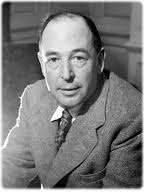
C.S. Lewis
There was also another statement Packer's brought to mind.  I will quote first from C.S. Lewis:  "We have not yet had the slightest notion of the tremendous thing He means to make of us."  (Mere Christianity, 205).  Because He can only do His thing in us on His terms, we will invariably encounter just how absolute the sanctification process really is.

Anyone with even a cursory testimony of the truthfulness of The Book of Mormon and the other standard works as divinely inspired scripture must come to an inescapable conclusion without much effort that the book is filled with absolutisms.  (The emphasis in italics below is mine).

Here's an example:  "Zion cannot be built up unless it is by the principles of the law of the celestial kingdom; otherwise I cannot receive her unto myself."  (D&C 105:5).

Another:  "And no unclean thing can enter into his kingdom; therefore nothing entereth into his rest save it be those who have washed their garments in my blood, because of their faith, and the repentance of all their sins, and their faithfulness unto the end."  (3 Nephi 27:19).

And another:  "And he commandeth all men that they must repent, and be baptized in his name, having perfect faith in the Holy One of Israel, or they cannot be saved in the kingdom of God.  And if they will not repent and believe in his name, and be baptized in his name, and endure to the end, they must be damned; for the Lord God, the Holy One of Israel, has spoken it."  (2 Nephi 9:23-24).

Yet another:  "And he that believeth and is baptized shall be saved, and he that believeth not, and is not baptized, shall be damned."  (D&C 112:29).

These are but four examples (there are a myriad more).  It's enough to make the point.  The voice of the Lord comes to us in absolute terms.  How it comes to us takes many forms -- through the whisperings of the Spirit, through reading the Word, through inspired servants and leaders, and through our trusted loved ones who are deeply invested in our success and happiness. 

The Lord Himself as the absolute choice as Savior and Redeemer is fixed and immovable.  "And the Lord said:  Whom shall I send?  And one answered like unto the Son of Man:  Here am I, send me.  And another answered and said:  Here am I, send me.  And the Lord said:  I will send the first."  (Abraham 3:27).  The debate is interesting, whether or not another could have stepped up as the "designated hitter" to replace the Savior had He faltered and withdrawn in Gethsemane and failed to move on to Golgotha in the culmination of His agony, but that's all it is -- a futile and meaningless debate.  How can you subscribe to the notion of a "backup plan" being necessary if you believe our Father in Heaven really absolutely knows the end from the beginning?

The scriptures tell us:  "And moreover, I say unto you, that there shall be no other name given nor any other way nor means whereby salvation can come unto the children of men, only in and through the name of Christ, the Lord Omnipotent."  (Mosiah 3:17).

"And under this head [Jesus Christ] ye are made free and there is no other head whereby ye can be made free.  There is no other name given whereby salvation cometh; therefore, I would that ye should take upon you the name of Christ, all you that have entered into the covenant with God that ye should be obedient unto the end of your lives."  (Mosiah 5:8).

"I say unto you, can ye think of being saved when you have yielded yourselves to become subjects to the devil?  I say unto you, ye will know at that day that ye cannot be saved; for there can no man be saved except his garments are washed white; yea, his garments must be purified until they are cleansed from all stain, through the blood of him of whom it has been spoken by our fathers, who should come to redeem his people from their sins."  (Alma 5:20-21).

"And I heard a voice from the Father, saying, Yea, the words of my Beloved are true and faithful.  He that endureth to the end, the same shall be saved.  And now, my beloved brethren, I know by this that unless a man shall endure to the end, in following the example of the Son of the living God, he cannot be saved."  (2 Nephi 31:15-16).

"For behold, the Spirit of Christ is given to every man, that he may know good from evil; wherefore, I show unto you the way to judge; for every thing which inviteth to do good, and to persuade to believe in Christ, is sent forth by the power and gift of Christ; wherefore ye may know with a perfect knowledge it is of God.  But whatsoever thing persuadeth men to do evil, and believe not in Christ, and deny him, and serve not God, then ye may know with a perfect knowledge it is of the devil; for after this manner doth the devil work, for he persuadeth no man to do good, no, not one; neither do his angels; neither do they who subject themselves unto him."  (Moroni 7:16-17).

"Therefore, whoso repenteth and cometh unto me as a little child, him will I receive, for of such is the kingdom of God.  Behold, for such I have laid down my life, and have taken it up again; therefore repent, and come unto me ye ends of the earth, and be saved."  (3 Nephi 22).

I have written about the definition of salvation before.  In the scriptures it is clear we must do something to be saved.  It is no mere profession of faith in Christ that saves us.  We must add to our faith repentance, baptism by immersion for the remission of all our sins, and receive the gift of the Holy Ghost; then we must endure and act upon that faith until the end of our mortal life to be saved.

This is all very absolute language, isn't it?  There are many authors in today's politically correct world who assiduously avoid the use of absolute language.  They would never think of using words like absolute, never, forever, cannot, always, and nobody or everybody.  Here's an example of politically correct thinking and writing, even going to the extreme of criticizing the use of such language:

"Overgeneralization creates a shrinking universe in which more and more absolute conclusions make life increasingly confining. You should not take one fact or event and make a general rule out of it. If you have a tendency to overgeneralize, you may interpret one bad experience at an Italian restaurant to mean that all Italian food is bad. Or maybe an art teacher in high school told you that you likely had no talent for watercolor, so you never attempted to express yourself again creatively.

"Clues that you are overgeneralizing are words like never, all, every, everyone, nobody, or always. These kinds of absolute words are your self-critic’s way of closing the door of possibility, inhibiting your access to change or growth."  (Excerpted and paraphrased from The Self-Esteem Companion [1999] by Matthew McKay, Patrick Fanning, Carole Honeychurch, and Catharine Sutker).

There is one fact in the universe that creates the general rule that applies to all:  The atoning sacrifice of the Only Begotten Son.  So one begins to understand why the use of absolute language seems to be so reprehensible in today's world.  When priesthood leaders align themselves and seek to align their congregations to the language of Heavenly Father and His Son, Jesus Christ, they are often criticized because the use of absolute language just isn't "sensitive," or "progressive," or "growth enabling."  Well, you decide.  Can you submit to the Creator of the universe, the Alpha and Omega, the Savior and Redeemer of all mankind as one who has descended below all things and has risen above all things to save us?  Or do you reject divinely-inspired absolute thinking, writing and revelation?

President Boyd K. Packer
All of this is merely preamble.  Here is President Packer's statement:

"I seldom use the word absolute.  It seldom fits.  I use it now -- twice.  Because of the Fall, the Atonement was absolutely essential for resurrection to proceed and overcome mortal death.  The Atonement was absolutely essential as the means for men to cleanse themselves from sin and overcome the second death, which is the spiritual death, which is the separation from our Father in Heaven."  (Let Not Your Heart Be Troubled, 79, emphasis mine).

I heard Richard Holzapfel once say that when writing about gospel topics faculty members at BYU are cautioned to let the General Authorities make use of the superlative language, not them.  For instance, when one says, "This is the most important something or other," better for those statements to come from prophets rather than professors. 

But one thing is clear to me.  Heavenly Father and Jesus Christ make liberal use of absolute language, and when General Authorities and other priesthood leaders make use of that language in their speeches and sermons, we should be paying attention.  Too often, however, we fail to discern between the man and the mantle, assuming we are listening to the man rather than giving obeisance to the inspired priesthood mantle he wears.

Elder Lawrence E. Corbridge
Elder Lawrence E. Corbridge said it well:  Jesus Christ is the Way. He is Light and Life, Bread and Water, the Beginning and the End, the Resurrection and the Life, the Savior of the world, the Truth, and the Way.

There is only one way to happiness and fulfillment. He is the Way. Every other way, any other way, whatever other way, is foolishness.

He offers a well of living water. Either we drink and never thirst more, or we don’t and foolishly remain thirsty still.

He is the Bread of Life. Either we eat and hunger no more, or we don’t and foolishly remain weak and hungry still.

He is the Light of the World. Either we follow Him and see clearly, or we don’t and foolishly remain blind and in darkness still.

He is the Resurrection and the Life. He said, “The words that I speak unto you, they are spirit, and they are life.” (John 6:63).  Either we learn of Him and have life more abundantly, (John 10:10) or we don’t and foolishly remain dead still.

He is the Savior of the world. Either we accept the blessings of His Atonement and are made clean and pure, worthy to have His Spirit, or we don’t and foolishly remain alone and filthy still.

He is the Way.  (Emphasis is mine above).

As a bishop giving counsel one day in my office, I felt impressed to share this scripture with one who was shedding buckets of tears because of her sins with little or no hope in sight:  ". . . repentance is unto them that are under condemnation [those who have reached the age of accountability at age eight] and under the curse of a broken law.  And the first fruits of repentance is baptism; and baptism cometh by faith unto the fulfilling the commandments; and the fulfilling the commandments bringeth remission of sins; And the remission of sins bringeth meekness, and lowliness of heart; and because of meekness and lowliness of heart cometh the visitation of the Holy Ghost, which Comforter filleth with hope and perfect love, which love endureth by diligence unto prayer, until the end shall come, when all the saints shall dwell with God."  (Moroni 8:24-26). 

Her drooping head came up out of her hands, her tears diminished, she began to walk eventually with more confidence she could be forgiven, all was not lost, she could look forward in faith, reset herself and walk in a newness of life.  Even the most grievous sins can be forgiven, but only upon the conditions Heavenly Father has set in place.  Those conditions involve the individual, the Church through its judges in Israel, and God.  All three elements must and can be addressed by the sinner who can be healed ultimately by the application of the absolute truths God has revealed.  God can and will forgive, the Church can and will forgive, and the individual can and eventually will forgive himself.

When we are feeling crushed beneath what we perceive may be a violated absolute law of the gospel, and when we reject the nature of the absolute requirements prescribed by the scriptures, we have simply not gone far enough down the path of true repentance.  When sitting in a class once under the tutelage of a master teacher who was asking how salvation is obtained, a bright student suggested an answer from a scriptural source, and the teacher merely suggested, "Keep reading."  The answer had not been complete because the student was omitting the absolute language, the part about being "cast off" (in other places "damned") if the absolute conditions prescribed in the passage were not applied. 

Here's the passage:  ". . . Marvel not that all mankind, yea, men and women, all nations, kindreds, tongues and people, must be born again; yea, born of God, changed from their carnal and fallen state, to a state of righteousness, being redeemed of God, becoming his sons and daughters; And thus they become new creatures; and unless they do this, they can in nowise inherit the kingdom of God.  I say unto you, unless this be the case, they must be cast off; and this I know, because I was like to be cast off."  (Mosiah 27:25-27).

It seems to destroy some people who have sinned, to think somehow they can never qualify for eternal life and exaltation because of their sins.  They say, "I can never be worthy enough to. . ."  Pitted against such absolute, authoritarian, heavy-handed expectations, they believe, there can be no hope.  However, properly understood, absolutism is the language of God, His Son, and His prophets.  When we align and put our faith in the Great I AM, who is "the way, the truth, and the life" (see John 14:6), we may rest assured moral absolutism is the requirement of heaven and that "no unclean thing" includes us.  Never believe Satan's lie that you are left alone in your sins to suffer.

All we have to do is submit and align ourselves, then everything is possible in changing.

Joseph Smith
Joseph Smith reasoned this way:

"But if this life is all, then why this constant toiling, why this continual warfare, and why this unceasing trouble? But this life is not all; the voice of reason, the language of inspiration, and the Spirit of the living God, our Creator, teaches us, as we hold the record of truth in our hands, that this is not the case, that this is not so; for, the heavens declare the glory of a God, and the firmament showeth His handiwork; and a moment's reflection is sufficient to teach every man of common intelligence, that all these are not the mere productions of chance, nor could they be supported by any power less than an Almighty hand; and He that can mark the power of Omnipotence, inscribed upon the heavens, can also see God's own handwriting in the sacred volume: and he who reads it oftenest will like it best, and he who is acquainted with it, will know the hand wherever he can see it; and when once discovered, it will not only receive an acknowledgment, but an obedience to all its heavenly precepts. For a moment reflect: what could have been the purpose of our Father in giving to us a law? Was it that it might be obeyed, or disobeyed? And think further, too, not only of the propriety, but of the importance of attending to His laws in every particular. If, then, there is an importance in this respect, is there not a responsibility of great weight resting upon those who are called to declare these truths to men? Were we capable of laying any thing before you as a just comparison, we would cheerfully do it; but in this our ability fails, and we are inclined to think that man is unable, without assistance beyond what has been given to those before, of expressing in words the greatness of this important subject. We can only say, that if an anticipation of the joys of the celestial glory, as witnessed to the hearts of the humble is not sufficient, we will leave to yourselves the result of your own diligence; for God ere long, will call all His servants before Him, and there from His own hand they will receive a just recompense and a righteous reward for all their labors."  (TPJS, 56).

We may be certain in the language of heaven that ample provision has been made for failure in the perfect plan.  In fact, "failure" at the outset in the Garden of Eden put us on the path back to Heavenly Father.

The absolute necessity for a Savior was introduced from that day forward.  Absolute conditions for salvation were set forth.  Prophets were called with absolute authority from heaven to teach and preach the gospel and to administer in the ordinances thereof.  Absolute truth was sent forth, obedience to which would result in absolute absolution and freedom from stain, enabling absolute grace, salvation, exaltation and in time absolute perfection.

So next time President Packer or any other priesthood leader uses absolute language to describe the path one must take to be saved, listen up.  Absolute language is the language of the Gods, and be forewarned it is not, worlds without end, politically correct.

It is, however, enabling and ennobling -- it is the only true path leading to change, growth, progress and exaltation.  And there is no other way.