Showing posts with label church of the firstborn. Show all posts

Friday, November 26, 2010

Eight Steps to Perfection

Sermon on the Mount

I've stood on the sloping hills surrounding the Sea of Galilee and imagined what it might have been like to be in that audience.  The Sermon on the Mount continues to be one of the most quoted pieces of scripture in the Christian tradition.  More than a theological essay on what constitutes "blessedness," the Savior offered an eight-step process leading to the fulfillment and universal happiness everyone seeks.  We call them the "The Beatitudes," but I have come to believe they are an outline for living designed to procure the perfect life. 

This topic of perfection is interesting.  Go back twenty or thirty years and you find Apostles preaching it is achievable, a goal to be sought, and a destination within our grasp if not in this life then the next.  More recently, scholars have suggested "perfection" isn't really that at all -- it's more a matter of being "complete," or "finished" in our faith in Christ's perfection.  I favor the latter interpretation, only because it seems to reflect more accurately on my belief in Christ as the Deliverer, the Savior and Redeemer.  (See Moroni 10:32-33).  I can "strive" for perfection in this life, perhaps one thing, one attribute, one principle and one commandment at a time, but in the end I must still rely totally and completely on the merits of Christ's perfection and perfect my faith in Him to be "finished" and "complete" in my faith.  Despite my best efforts at perfection without Jesus Christ, I remain a fallen mortal, weak and unfit for the Kingdom.

I've done perfect work with the Word of Wisdom, Sabbath day observance, with tithing, with Church attendance, with a host of other "achievables," but perfect in everything?  Uh, no, not even close.  But in my hope of Christ's perfect atonement for me, I have come close to perfection as I come to view myself as fallen and weak. 

I believe the Beatitudes offer a way of life worth pursuing.  Four of the eight have to do with our individual souls, the living and sanctifying of our personal lives.

1.  Blessed are the poor in spirit.

2.  Blessed are they that mourn.

3.  Blessed are they that hunger and thirst after righteousness.

4.  Blessed are the pure in heart.

"To be poor in spirit"

Goates cousins

I see myself as spiritually needy.  I have been poor in spirit when I lack faith, and the older I grow the more aware I am of my dependency upon the Lord for everything -- breath, clothes, warmth, transportation, food, health and life.  When I witness the births of these little grandchildren I realize now more than I ever did as a young father how precious, how fragile, and what a miracle birth really is.  I now never let a day pass without acknowledging fervently my gratitude for guidance and direction of the Holy Spirit.  When I have been poor in spirit and acknowledged it, I have been made rich almost in the moment I have asked for a greater endowment.  There have been times when I needed to be filled, to be rich in spirit -- times when I was a father and my best efforts fell short, times as a bishop when there were no easy answers to perplexing problems I had never considered until they were presented to me by struggling souls.  I had to be rich to fill those who were poor in spirit.  And now looking back, I realize I have been nothing more than a conduit for the Spirit.  Needing forgiveness myself, it has been easier to forgive, and realizing how patient God has been with me, it has been easier to value patience as a virtue in my interactions with others.  I hasten to add "easier," but still working at it.  Thus I have been made rich in spirit.  Each day presents a new day for expanding need to have more spirit within me.  Each day together and individually we plead for the guidance of the Spirit -- to be made rich in spirit.  All the wealth and learning or worldly position cannot displace the need for the Spirit in our lives.  To have the Spirit is the polar opposite of pride or self-conceit.  I have never known a person filled with pride who had the Spirit.  Job reminds us, "The Lord gave, and the Lord hath taken away; blessed be the name of the Lord."  When we sense our need for the Spirit, we are ready for adoption into the "church of the Firstborn, and to become the elect of God."  (See D&C 76:50-70).

"To mourn"

I have routinely mourned as I have come to understand my feet are firmly planted in clay.  While I long to surmount and triumph over ALL my sins, I am routinely mourning continually over a few I keep repeating.  I know what it is to experience "godly sorrow that worketh repentance."  The magnitude of my sins may not be as noticeable as others', but the awareness of the incremental need to improve is escalating daily.  I don't let my mourning for my weakness consume me, however, because my faith in Christ accelerates through my new found awareness and hope displaces the sorrow for self.  My tendencies are slipping away.  Old age has something to do with it, I suppose, but choosing consciously to avoid sin wipes away the mourning.  Losing the desire to sin while younger is more imporant than losing the ability to sin when older.  I love the way the Apostle Paul said it, as he found "glory in tribulations knowing that tribulation worketh patience; and patience, experience; and experience, hope."  (Romans 5:3-4).  The formula is offered in the true definition of what membership in the Church involves:  You must be willing "to bear one another's burdens, that they may be light."  You must be willing to mourn with those that mourn, and comfort those that stand in need of comfort.  (Mosiah 18:8-9).  I never understood that passage until I was a bishop -- the mourning has more to do with the old man of sin dying than an actual funeral.  I had a perpetual stock of Kleenex on my bishop's desk.  Never before or since have I witnessed such sorrow.  In a word, we mourn first for our own sins until we develop faith in Christ, then we succor and comfort others in their mourning over theirs.  As we lift and bless others, all the boats in the harbor rise including our own.

"To hunger and thirst after righteousness"

I once heard someone explain fasting this way:  "To fast without a purpose is merely to starve."  Have you noticed how precious water is after twenty-four hours of abstinence?  Have you savored the taste of food when you have gone without for a day or so?  Was that hunger and thirst coupled with a spiritual purpose?  Has desiring a spiritual gift or seeking a worthwhile purpose enhanced your lack of temporal comfort for a period?  When we experience that hungering and thirsting, we begin to understand what the Savior must have had in mind when He said we must hunger and thirst after righteousness with as much fervor as quelling our physical hunger and thirst when it seems so urgent.  It's that hungering and thirsting that leads those who come camping in Woodland and other holiday weekends to come seeking fellowship with the saints in our three-hour block of meetings, even when the seating is hard to come by.  It's that hungering that drives us into the scriptures to feast at the doctrinal banquet table, and steers our course to temple altars where the water of eternal life is dispensed without restriction.  Those who keep the Sabbath day holy experience that hunger and thirst instead of snowmobiling, four-wheeling, hunting and boating on the Lord's day.  When our children were younger and we passed many of the them headed for the hills while we were headed to Church, I often remarked to lighten their mood, "They aren't really having fun.  We're going to have a lot more fun in three hours of meetings."  The most familiar motto of Mormonism may be this one:  If you ask with "a sincere heart, with real intent, having faith in Christ, he will manifest . . . truth . . . unto you, by the power of the Holy Ghost," and by its power you "may know the truth of all things."  (Moroni 10:4-5).  When we seek to know the truth of all things, we are then seeking righteousness with all our hearts.  Then "your whole bodies shall be filled with light and there shall be no darkness in you."  (D&C 88:67).

"The pure in heart"

President Harold B. Lee
Only the pure see God.  Harold B. Lee used to tell the story from Jewish writings of a man who saw an object in the distance, an object he thought was a beast.  As it drew nearer he could perceive it was a man and as it came still closer he saw it was his friend.  You can see only that which you have eyes to see.  Think about what it must have been like to live in Galilee in the time of Jesus.  You may have known and recognized Jesus only as a son of Joseph the carpenter.  His critics called him a "winebibber" (drunkard) because his teachings were so counterculture to the corrupt Jewish Pharisees.  Others thought he was possessed of devils.  If you were there, how would you have seen Him?  Would you have known the Son of God when you met Him?  Even two of his disciples did not know him on the road to Emmaus until "their eyes were opened."  (Luke 24:13-27).  Only the righteous saw him as the Son of God.  Even now, only if you are pure in heart will you be able to "see God."  There are many among us today who cannot see God in His leaders, the living prophets He has sent to guide us.  Those who find fault speak from an impure heart.

Entrance into the Kingdom

It is not enough to "be good."  We must be "good for something" to enter the Kingdom of Heaven.  We must actually do something in our relationships with others to be acceptable candidates for membership.

5.  Blessed are the meek.

6.  Blessed are the merciful.

7.  Blessed are the peacemakers.

8.  Blessed are they which are persecuted.

"The meek"

Elder Neal A. Maxwell
Elder Neal A. Maxwell wrote the book on meek.  Said he:  "Meekness ranks so low on the mortal scale of things, yet so high on God's: 'For none is acceptable before God, save the meek and lowly in heart' (Moroni 7:44).  The rigorous requirements of Christian discipleship cannot be met without the tutoring facilitated by meekness:  'Take my yoke upon you, and learn of me; for I am meek and lowly' (Matthew 11:29).  Jesus, the carpenter, 'undoubtedly had experience making yokes' with Joseph (Interpreter's Dictionary of the Bible, vol. 4 [New York: Abingdon Press, 1962], 925), and thus the Savior gave us that marvelous metaphor (see Matthew 11:20).  Unlike servitude to sin, by wearing his yoke we truly learn of the Yoke Master in what is an education for eternity as well as for mortality.  Meekness is needed, therefore, in order for us to be spiritually successful -- whether in matters of the intellect, in the management of power, in the dissolution of personal pride, or in coping with the challenges and routine of life.  With meekness, living in 'thanksgiving daily' is actually possible even in life's stern seasons (Alma 34:38)."  ("Meek and Lowly," BYU Devotional, October 21, 1986).  "He that is slow to anger is better than the mighty." (Proverbs 16:32).  One who is meek is teachable and a natural leader, though often overlooked.  Though he may be trampled on earth during mortality, he is the "salt" of the earth and will one day inherit it.

"To be merciful"

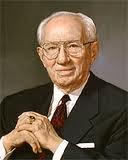
President Gordon B. Hinckley
To receive the mercy we for which we hope and desperately need from our Savior, we must extend it to others first.  In the laboratory of family life we often exchange unkind and cruel words, we render harsh judgments, and we criticize unfairly.  Those whom we are closest to often receive the worst of us.  Years go by without the needed salve of forgiveness.  Regardless of the details (even if we are justified in our anger toward the acts of others or their misjudgment of us) we are nevertheless required to forgive ALL men.  (D&C 64:8-11).  President Gordon B. Hinckley wrote a definitive article on this topic in one of his First Presidency Messages.  It's one thing to say we love each other, then quite another to take their names in our lips and openly criticize, judge, or reject them for whatever wrong they have perpetrated against us.  Who are we to complain about being misjudged or treated unfairly by our fellowmen, when our complaint is directed toward the Savior?  Did He descend below it all or not?  Can we teach Him anything about irony or being unjustly persecuted?  Our willing suffering is often a needed witness against greed, evil and despotism.

"Peacemakers, the children of God"

These are rare human beings in my experience.  Peacemakers shall one day be called the children of God. Trouble-makers in our modern world, however, are easy to discern.  They are everywhere.  "World peace," that long-sought goal, can only be accomplished one heart at a time.  James Ferrell offered a blockbuster book a few years ago, The Peacegiver: How Christ Offers to Heal Hearts and Homes.  If we could all learn to put away all the metaphorical swords we use against family, neighbors, work associates, political opponents, obnoxious drivers, lousy customer service personnel, etc. (it's a long list, isn't it?) we would live in a more peaceful world.  And the world of peace can begin only in our hearts.  Perhaps this is the ultimate answer to world peace.  Could it be that simple?  How ironic the heralded hymn at His birth was "Peace on earth, goodwill to men."  Since that day, however, the world has known little of peace.  Someone did a study about war since the Restoration in 1830, and discovered the world has not had a day of peace since.  That's an irony that will one day be overturned.  One day the Prince of Peace will finally introduce peace to this world, but only after we have filled up the dregs of war to overlowing and exhausted ourselves.  To be a peacegiver and a peacemaker in the midst of darkness is as "otherworldly" as one could be.

"The persecuted"

"Truth forever on the scaffold,
Wrong forever on the throne,
Yet the scaffold sways the future,
And behind the dim unknown,
Standeth God within the shadow
Keeping watch above his own."

There is a price to be paid for discipleship.  None will pay the uttermost farthing for Christ without suffering persecution for the truth's sake.  The history of the world is replete with stories of the martyrs in the cause.  Tyndale and other great reformers, pilgrims, prophets, pioneers and prophets have been sacrificed and slain in the fray.  While the persecution may be more subtle in these last days, the minions of the abyss are raging against the light as never before.  Darkness is everywhere, but so is the warmth of the light from the "Son."  Those who do not "see" God nor His servants may temporarily deter others in their quest for truth, but someday those forces will be overcome and the Messiah will come.  Those who have been persecuted will be recompensed for their losses.  The scales will tilt again to adjust for those who seek God's righteousness.  As long as this earth stands there will be evil, those who love and make a lie, in opposition to an almost universal quest for that which is right.  Whether we find it in direct opposition to the Church or in our political discourse, most oppose that which they do not comprehend.  Like the World War II bomber pilots, always remember if you aren't drawing some flak from below you probably aren't over your target.  The Savior taught, "Woe unto you when all men shall speak well of you! for so did their fathers to the false prophets."  (Luke 6:26).

Some would call the Sermon on the Mount and the Beatitudes "simplistic" today.  However, as it was timely counsel then, it remains timeless instruction leading toward perfection and exaltation today.

If we would truly be "blessed," here are the eight steps toward realizing "blessedness" and perfection.

Wednesday, June 30, 2010

Fathers Day and Abrahamic Tests

With all the political chatter recently, Fathers Day 2010 slipped past without so much as a whisper from me, but there were some thoughts I captured four years ago that are worth preserving here.  The following is taken from my journal of that day:

On Sunday morning, Father's Day, 2006, I awoke with three distinct "bullet points" for my upcoming talk about service in the Woodland Ward that day. In the mercy of the Lord, and yet another demonstration of the marvelous economy of the Spirit, it seemed a personal message to me in addition to forming the foundation for what I was to say in my talk.

Here are the three points, lest they be forgotten:

1. Do not fear the hike up the mountain of preparation.
2. Embrace the Abrahamic tests in your life.
3. Accept the invitation to come in at the front gate of the church of the Firstborn.

Having just finished that fabulous book about Abraham, The Blessings of Abraham, by E. Douglas Clark, I suppose my reading must have laid the foundation for my talk -- all I got early in the morning was the outline.  It was left to me to fill in the detail around those three points.  (That's not a misprint on the price, but it's worth every penny, trust me).

I began by expressing the wish to elevate our thinking about service. I suggested that no one is opposed to the notion that service is a desirable trait for all disciples to have. I started discussing Abraham's preparations for answering the call to be prepared for the complete consecration of his life by answering the call to go to the land of Moriah to a mountain he was told he would be shown to sacrifice his only son.

It was a three day journey. He began immediately to make the preparations, and he did as he was told to do -- cut the wood for the pier upon which Isaac was to be offered.

Imagine the thoughts that went through his mind on that three day journey. Imagine what Isaac was thinking. What is unknown from the account in Genesis is what Sarah was thinking. Imagine that faith on the part of all three! Because he knew God was in it, he did not hesitate.

He was led by the Spirit to Mount Moriah (what is today known in Jerusalem as the Temple Mount where the Dome of the Rock now sits). His preparation and his willingness to carry out the required sacrifice is what tested him to the limit.

Joseph Smith once said if there had been a more severe test God could have devised to thoroughly try the heart of Abraham, God would have given Abraham that test instead. The whole idea of Abrahamic tests in our lives is to test the depth of our commitment to God -- to infuse us with the desire to consecrate our lives to God's work.

In order to serve our fellowmen, it would seem, each of us must bow to the demands of consecration -- the sacrifice of all earthly things and desire.  Simultaneously, we are offering the only thing to God that is truly ours to give -- our free will.

These are high and holy objectives, even "dangerous doctrines" in the eyes of some. But that was the example Abraham set before us as aspiring disciples.

Then I suggested each of us would have similar tests if we sought fellowship with the saints of former ages. How would you feel if invited to sit down to dinner one night with luminaries like Noah, Abraham, Melchizedek, Alma, Paul, Elijah, and others like them if in your own right you had not been willing to offer the same commitment they demonstrated? To think we would someday inherit an equal portion with them without a similar measure of sacrifice would be haughty indeed! I can't imagine meeting Paul someday in the realms ahead, but when I do I want to be able to look him in the eye, shake his hand, and feel adequate.  That's all.  And I realize only the atonement of Christ can level that playing field for me. 

I know I'm not even a freckle on Paul's nose, but through Christ and His sanctifying blood I want to at least be able to hug him without being embarrassed at my lack.

When those Abrahamic tests come to each of us (and surely they do), I suggested rather than blame God for our hardships and trials, we must embrace the chastening and accept the tutorial as a gift from God to help reveal ourselves to ourselves. Finding God in the fiery furnace is what it appears to be all about.

To conclude, I suggested that fellowship in The Church of Jesus Christ of Latter-day Saints, begins at the gate of baptism. Fellowship in the church of the Firstborn, however, is outlined in D&C 76, and is found beyond the gates of the temple within in the covenants we make there.

Many come in at the gate to the outward Church (capital "C"), but few seem to find the fellowship of the inward church (lower case "c") outlined in the revelations.

Like these outward ordinances God offers to us with a promise of someday obtaining as joint heirs with Christ all that He possesses, too many members of the Church conclude that nominal membership in the Church is all there is, never looking beyond and deeper into what can only be termed as the "mysteries of godliness," which I feel I am just beginning to understand in part (I'm slow).

I suggested there is a church within a Church we must each discover by doing the works of Abraham, embracing his example and following the same path he laid out for us. Abraham and Sarah represent the path of true discipleship in modeling concern, service and lovingkindness for all our Father in Heaven's children. This awareness is anchored in humility, kindness and love for others.

I remembered that years ago during the time of President Lee, President Kimball and President Benson, the prophets used to answer the reporters' questions about why the Church wasn't doing more to lift the burdens of the millions around the earth who were suffering with expressions that we simply didn't have the resources to do as much as we would like, although we would do more if we had the resources. Now we do.

I concluded with these inspired words from President Hinckley:

"In the last ten years we have supplied in cash and commodities hundreds of millions of dollars in humanitarian aid to those not of our faith.
"We have traveled the earth bearing witness of this, the work of the Almighty. During these same years I personally have traveled nearly a million miles visiting some 70 countries. My beloved companion traveled with me until a year ago when she passed away on the 6th of April. It has been lonely since then.
"Our hope concerning the future is great and our faith is strong.
"We know that we have scarcely scratched the surface of that which will come to pass in the years that lie ahead." (Ensign, May 2005, 4).

When it comes to service, we have barely begun as a Church and individuals to do the works of Abraham. We must enlist all "our substance" (as King Benjamin described it -- not just money) but everything we have and are, or ever will have or be, to fulfill that ideal to truly consecrate our lives for the building up of the kingdom of God on earth and for the establishment of Zion.

I don't know if anyone else in the audience learned anything in that talk, but I know the Lord certainly enlarged and expanded my vision.

On another occasion, President Hinckley reminded us: "We must reach out to all mankind. They are all sons and daughters of God our Eternal Father, and He will hold us accountable for what we do concerning them. . . May we bless humanity with an outreach to all, lifting those who are downtrodden and oppressed, feeding and clothing the hungry and the needy, extending love and neighborliness to those about us who may not be part of this Church." (Ensign, November 2001, 6).

I concluded by testifying there is a living prophet among us. He is no small thinker, this man Gordon B. Hinckley. Indeed, he is a man like Abraham, and we can do no less if we would claim our own place with them in the church of the Firstborn. As "firstborns" in the church of THE Firstborn, only by doing the works of Abraham will we claim our rightful place as a joint heir with Jesus Christ, the Firstborn Son, inheriting all that the Father hath.

Now that he's gone, I could easily say the same of his successor, President Thomas S. Monson, whose example of Christian service and love for his fellowmen knows no boundaries.  Said he recently:

"I believe the Savior is telling us that unless we lose ourselves in service to others, there is little purpose to our own lives. Those who live only for themselves eventually shrivel up and figuratively lose their lives, while those who lose themselves in service to others grow and flourish — and in effect save their lives."  ("What Have I Done For Someone Today?", Ensign, November 2009, 84-87).

And yes, these are all thoughts beyond my feeble attempts to understand or adequately explain, underscoring the source of it all.

I have always loved the words of Nephi.  Some have called it "the psalm of Nephi:"

“My soul delighteth in the things of the Lord; and my heart pondereth continually upon the things which I have seen and heard," Nephi stated. (2 Nephi 4:16).

And yet, as all of us have sinned and "come short of the glory of God," (see Romans 3:23) Nephi, too, explored those feelings:

"Nevertheless, notwithstanding the great goodness of the Lord, in showing me his great and marvelous works, my heart exclaimeth: O wretched man that I am! Yea, my heart sorroweth because of my flesh; my soul grieveth because of mine iniquities. I am encompassed about, because of the temptations and the sins which do so easily best me. And when I desire to rejoice, my heart groaneth because of my sins; nevertheless, I know in whom I have trusted." (2 Nephi 4:17-19).

Through all of the trials and tribulations Nephi had been through, he had come to know the Lord. "And having seen many afflictions in the course of my days, nevertheless, having been highly favored of the Lord in all my days; yea, having had a great knowledge of the goodness and the mysteries of God..."

Nephi truly does know the Lord. He has seen him (2 Nephi 11:2,3). He has been taught by angels many times. He has been supported and strengthened by the Lord through the terrible ordeal of the wilderness crossing and the ocean voyage to the Promised Land.

I have always wondered how I could possibly be weighed in the balance with Paul and Nephi and not found wanting.  Then I have remembered, "Nevertheless, I know in whom I have trusted."