Call me stupid if you wish, but the most intelligent speech last night didn't come from the POTUS. I didn't even bother to tune in to any of it. This morning, I downloaded Senator Mike Lee's response, and I believe (without even referencing BHO's "official" SOTU speech) there couldn't be a more well-thought-out approach than Lee's.
The only question remains whether "lofty rhetoric" from an empty suit will continue to persuade Americans or not. I pray IT WILL NOT.
Showing posts with label national debt. Show all posts
Showing posts with label national debt. Show all posts
Wednesday, January 29, 2014


Saturday, July 27, 2013
Detroit, Bankrupt, and For What?
This past week a new chapter in history was written in America, and it's not a happy chapter. The once-proud Motor City of the 50s has become the poster child for the biggest Chapter 9 bankruptcy of a municipality. The city fathers managed to run up $18 billion in debt that could not be repaid.
Many will clamor for the federal government to bail out Detroit. By the way, the "federal government" here should be translated - YOU! Taxpayers will soon come to realize it's really THEIR money at stake here whenever the topic turns to "bailout." I'm wondering if finally someone in Washington will draw the line in the sand and say, "No. We will not bail out ANY reckless spending by cities, counties or state governments." Then, having set THAT precedent, we might be able to establish a precedent for the federal government too.
 Detroit’s bankruptcy filing is only the latest chapter in a long slow-reading book that has been written over a period of decades, but it should serve as a model for what NOT to do if you're running a city government. We used to study GM in business school as a model for American ingenuity and good old fashioned know-how when it came to making automobiles in the post-World War II era.
But Detroit's greatest strengths (its workers) became Detroit's greatest weaknesses (the unions those workers belonged to). The manufacturing decline in America had its roots in the factories of Detroit. The basic economic math became immutable as the city once bristling with economic wellness lost more than 60 percent of its population (2 million down to 800,000) because it gave exactly the wrong response to the manufacturing decline. On a grand scale we've seen Barack Obama doing the same thing at the federal level.
Detroit’s city fathers, as Mitt Romney documented so well in his campaign for the presidency, attempted to do the impossible by shifting resources from the private sector to the public sector. It's straight out of the socialists' play book. It's never worked ANYWHERE, and least of all in America. The leaders in Detroit failed to realize people who worked there would react predictably when they raised taxes and increased regulations, simultaneously growing their city government like the consequences would never come home to roost.
The tragedy here was the city was following the lead of a doomed GM, Chrysler and Ford. Rather than implement sound financial and economic policies and promote a vibrant private sector to help rejuvenate the city, Detroit's leaders did exactly what the Big Three automakers were doing - growing their city government through generous promises to their workers with unaffordable future pension and health care benefits. Just as the auto unions drove the Big Three to their knees, by far the biggest portion of Detroit’s debt comes from these unaffordable promises: $6 billion in health and other post-employment benefits for retirees and $3 billion in pensions. Mind you, these are public employees unions who won their concessions through collective bargaining, again mirroring their brothers in the private unions. They ignored the warnings of the past that public employees should never be granted collective bargaining powers.
Wisconsin's Governor Scott Walker taught the nation a powerful lesson when he stood up to the public unions in his state. Detroit's failure is only an endorsement of Walker's approach to responsible government having to take principled and difficult stands. By doing what he did, Walker helped Wisconsin avoid a similar fate.
Today I read an interesting article about which states are running down a fast track to financial oblivion. You might want to check to see if your state is on this list. Do you want to guess which states headline this list?
For many decades, Detroit had sustained itself by bad fiscal management: unaffordable borrowing, state grant schemes, raising taxes, and deferring public pension contributions rather than cutting city spending. And now the end has finally come. The piper always demands payment. With all tax rates close to their statutory max and dismal public services that discourage individuals and businesses from remaining in or coming to Detroit, the city simply cannot continue to fund its operations and service its debt. The population voted with its feet, and the population is who pays the taxes. As Margaret Thatcher once accurately warned, "The problem with socialism is eventually you run out of people to tax." And once the population vacated Detroit, there was no way to keep its promises to the public employee unions. It used to be Economics 101 where I went to school.
It is likely Detroit’s creditors and pensioners may receive pennies on the dollar to what they are owed. That is the sad but irreversible reality. Certainly there will be cries of “unfairness.” But a federal bailout in which we the taxpayers who live in fiscally responsible cities and states have to pay for the services and promises made by city and state governments that waived such discipline for decades, would be the height of "unfair." The "pooling of risk" is a principle applied to insurance policies, where through no fault of their own premium payers can expect to be covered from the larger pool of policy owners when tragedy strikes. Such is NOT the case, and must NEVER be the case here.
Let's be honest, Detroit is not the only city facing serious financial trouble. By setting the precedent of offering NO help for fiscally mismanaged municipalities, it is hoped the representatives of the taxpayers in Washington could learn a lesson from Detroit and begin to put their own fiscal house in order. I am aware this may be wishful thinking and nothing more, but let's start here in Detroit. Further, remember all that bailout money that was spread around in 2009? If it had been helpful, wouldn't every state now be on a more firm financial footing? Bailouts for smaller governments by BIG government simply don't work. PERIOD.
In Utah, a state where leaders are routinely lauded for good management because they are good stewards, any idea of bailouts for cities as poorly managed as Detroit would be punitive and would fail to achieve the intended goal to force local governments to confront and deal with their own mismanagement. If that kind of discipline is required and demanded of the average citizen, is it too much to expect that our public officials should be required to do less? Facing the natural consequences of our poor choices is a childhood lesson, one it seems government officials at all levels seem loathe to learn.
Washington must learn by embracing and valuing what has happened in Detroit. Total national debt is over $17 trillion. For your convenience, I am tracking it day by day here at The Goates Notes (see the window on the right). That debt load is larger now than the whole U.S. economy. It is unsustainable. It is reckless. The profligate spending will ruin this once-great country if allowed to continue in the name of "stimulating the economy."
Look at the factors that drove Detroit into bankruptcy, as I outlined above. Beyond escalating growth in nearly all federal programs, future spending will be driven to the breaking point by our own federal retiree spending programs — Medicare, Medicaid, and Social Security. You can add Obamacare to that list now.
It won't be enough to draw the line in sand by discouraging other troubled state and local governments from seeking federal bailouts. They must be compelled to put their fiscal houses in order through their own best efforts at reducing spending.
And those we placed in control in Washington must establish a good example by fixing their own fiscal problems.
Many will clamor for the federal government to bail out Detroit. By the way, the "federal government" here should be translated - YOU! Taxpayers will soon come to realize it's really THEIR money at stake here whenever the topic turns to "bailout." I'm wondering if finally someone in Washington will draw the line in the sand and say, "No. We will not bail out ANY reckless spending by cities, counties or state governments." Then, having set THAT precedent, we might be able to establish a precedent for the federal government too.

But Detroit's greatest strengths (its workers) became Detroit's greatest weaknesses (the unions those workers belonged to). The manufacturing decline in America had its roots in the factories of Detroit. The basic economic math became immutable as the city once bristling with economic wellness lost more than 60 percent of its population (2 million down to 800,000) because it gave exactly the wrong response to the manufacturing decline. On a grand scale we've seen Barack Obama doing the same thing at the federal level.
Detroit’s city fathers, as Mitt Romney documented so well in his campaign for the presidency, attempted to do the impossible by shifting resources from the private sector to the public sector. It's straight out of the socialists' play book. It's never worked ANYWHERE, and least of all in America. The leaders in Detroit failed to realize people who worked there would react predictably when they raised taxes and increased regulations, simultaneously growing their city government like the consequences would never come home to roost.
The tragedy here was the city was following the lead of a doomed GM, Chrysler and Ford. Rather than implement sound financial and economic policies and promote a vibrant private sector to help rejuvenate the city, Detroit's leaders did exactly what the Big Three automakers were doing - growing their city government through generous promises to their workers with unaffordable future pension and health care benefits. Just as the auto unions drove the Big Three to their knees, by far the biggest portion of Detroit’s debt comes from these unaffordable promises: $6 billion in health and other post-employment benefits for retirees and $3 billion in pensions. Mind you, these are public employees unions who won their concessions through collective bargaining, again mirroring their brothers in the private unions. They ignored the warnings of the past that public employees should never be granted collective bargaining powers.
 |
| Governor Scott Walker, Wisconsin |
Today I read an interesting article about which states are running down a fast track to financial oblivion. You might want to check to see if your state is on this list. Do you want to guess which states headline this list?
For many decades, Detroit had sustained itself by bad fiscal management: unaffordable borrowing, state grant schemes, raising taxes, and deferring public pension contributions rather than cutting city spending. And now the end has finally come. The piper always demands payment. With all tax rates close to their statutory max and dismal public services that discourage individuals and businesses from remaining in or coming to Detroit, the city simply cannot continue to fund its operations and service its debt. The population voted with its feet, and the population is who pays the taxes. As Margaret Thatcher once accurately warned, "The problem with socialism is eventually you run out of people to tax." And once the population vacated Detroit, there was no way to keep its promises to the public employee unions. It used to be Economics 101 where I went to school.
It is likely Detroit’s creditors and pensioners may receive pennies on the dollar to what they are owed. That is the sad but irreversible reality. Certainly there will be cries of “unfairness.” But a federal bailout in which we the taxpayers who live in fiscally responsible cities and states have to pay for the services and promises made by city and state governments that waived such discipline for decades, would be the height of "unfair." The "pooling of risk" is a principle applied to insurance policies, where through no fault of their own premium payers can expect to be covered from the larger pool of policy owners when tragedy strikes. Such is NOT the case, and must NEVER be the case here.
Let's be honest, Detroit is not the only city facing serious financial trouble. By setting the precedent of offering NO help for fiscally mismanaged municipalities, it is hoped the representatives of the taxpayers in Washington could learn a lesson from Detroit and begin to put their own fiscal house in order. I am aware this may be wishful thinking and nothing more, but let's start here in Detroit. Further, remember all that bailout money that was spread around in 2009? If it had been helpful, wouldn't every state now be on a more firm financial footing? Bailouts for smaller governments by BIG government simply don't work. PERIOD.
In Utah, a state where leaders are routinely lauded for good management because they are good stewards, any idea of bailouts for cities as poorly managed as Detroit would be punitive and would fail to achieve the intended goal to force local governments to confront and deal with their own mismanagement. If that kind of discipline is required and demanded of the average citizen, is it too much to expect that our public officials should be required to do less? Facing the natural consequences of our poor choices is a childhood lesson, one it seems government officials at all levels seem loathe to learn.
Washington must learn by embracing and valuing what has happened in Detroit. Total national debt is over $17 trillion. For your convenience, I am tracking it day by day here at The Goates Notes (see the window on the right). That debt load is larger now than the whole U.S. economy. It is unsustainable. It is reckless. The profligate spending will ruin this once-great country if allowed to continue in the name of "stimulating the economy."
Look at the factors that drove Detroit into bankruptcy, as I outlined above. Beyond escalating growth in nearly all federal programs, future spending will be driven to the breaking point by our own federal retiree spending programs — Medicare, Medicaid, and Social Security. You can add Obamacare to that list now.
It won't be enough to draw the line in sand by discouraging other troubled state and local governments from seeking federal bailouts. They must be compelled to put their fiscal houses in order through their own best efforts at reducing spending.
And those we placed in control in Washington must establish a good example by fixing their own fiscal problems.
Sunday, November 25, 2012
NJ Flood Damage, Inflation, National Debt and Politicians
From this morning's edition of American Thinker:
Hurricane damages and the national debt
The headline from philly.com boldly proclaimed, "Christie pegs New Jersey's Sandy damage at $29.4 billion." The article went on to explain:
"This preliminary number is based on the best available data, field observations, and geographical mapping," Christie said in a statement released Friday evening. "I will spare no effort and waste no time to rebuild and restore our tourism industry, our transportation and utilities infrastructure, and the lives of our citizens for the long term."
$29.4 billion is a supertanker load of money, especially when we consider the amount of damage Sandy caused in the space of just a couple of days. But fear not, Governor, that much money is just a drop in a fifty-five gallon drum when it comes to Federal spending.
Let's look at the rampaging increases in our national debt since the election, according to the US Treasury. On November 14th, 2012 our national debt was $16.244 trillion. Twenty-four hours later the national debt stood at $16.278 trillion. This increase of over $34 billion dollars in a single day could easily pay for the rebuilding of thousands of houses, plus billions more for transportation, electrical and water infrastructure mitigation for the entire state of New Jersey.
New Jersey, New York, Pennsylvania, Delaware, Virginia, Maryland are hungrily anticipating having all their "Sandy costs" reimbursed for less than weeks' worth of Federal borrowing. No doubt these state's congressional delegations are itching to get paws on all this "free" money. After all the current Administration's unspoken policy assumes our children and grandchildren will inherit this mountain range of debt. Why else would the US Treasury borrow $34 billion dollars a in a single day unless they never actually planned to pay it back?
* * *

The article caught my attention because it helps to put into perspective what we are up against as a nation. It would be naive to assert we got here solely because of Barack Obama. The reason there was such a steady drumbeat about the fact that it was all GWB's fault is because that line tested so well among focus groups. Americans in the majority actually believe the financial condition of this nation is the fault of the previous administration. Even that is simplistic.
We got here over the course of almost a century of slowly boiling in our own juices. As the water temperature has slowly climbed we are now at the point of peril - socialism has fouled the pistons of the engine of free enterprise, and all that remains is determining whether or not we can clear the mechanisms to once again be profitable.
Economists are still divided. "The dark science" of economics instructs some practitioners that the traditional Keynesian response - borrow to create stimulus - is still working and must be employed again and again until the economy jump starts. We are borrowing 40 cents of every dollar the federal government is spending. Does that sound like a taxation problem or a spending problem to you? Others worry that the growth potential of the GDP may never again rise above 1.5 percent annually, where historically it has averaged 4 percent growth per year. All our problems go away if the growth engine gets revved up again and we grow our way out of debt. Every year that goes by now sees just the opposite result. Instead of a proven winner at the throttles, Mitt Romney, we settled for a rank amateur with absolutely no economic track record except his last four years. God help us all with that choice, because we will need all the help we can get.
The idea that politicians may actually be thinking to themselves that there will never be a day of reckoning on the national debt, that we will never have to pay back the national debt now held by our own Treasury, is the only logical conclusion one can draw from their dithering and lack of willingness to address the obvious issues before us as a nation. Instead of curbing spending they are poised once again to do what Congress always does best when they get in a bind - increase taxes, and not just by closing loopholes for deductions. Now they are discussing increasing tax rates on the wealthy, defined as those making more than $250,000 per year.
I have had discussions with those who supported Barack Obama. Stupidly, they will tell me, "A tax increase on the wealthy doesn't really affect me, so what's the big deal?" What they are not being told is a whopping tax increase is coming their way too. The truth is THAT tax increase has already arrived - I call it the "economy tax" in the form of inflation. It's the cruelest tax of all, but it is felt most acutely by those who are struggling the most in this economy. A liberal friend of mine tried to convince me there was no inflation except on things like gasoline and food, where he had noticed an increase in prices but asserted, "Other than those two areas there doesn't seem to be any inflation." Ask yourselves, are there any two areas that affect the average American citizen more than food and gasoline? My biggest concern for folks who talk this way is they don't even recognize the water temperature in the pot has reached boiling. There is no sense of urgency and a willingness to sustain the status quo. I would maintain the status quo is unsustainable.
There are many who argue every day in cyberspace that we have already gone over the fiscal cliff and there is no way back from that reality. Perhaps they are right. Unless another midnight madness deal of some kind is hammered out in Washington to avert it, taxes will increase dramatically across the board on January 1, 2013. Payroll tax withholdings will return to their normal level, meaning an increase in each paycheck of 2 percent, reducing take home pay for all wage earners. The dreaded AMT will be re-introduced to lower-level taxpayers. Tax credits for students will be eliminated. Taxes on Obamacare will begin to take effect on employers who fail to provide health insurance for their employees. Income tax rates on the small business owners whose incomes exceed $250,000 (families) and $200,000 (individuals) will increase. And let's not forget the estate tax, or "death tax," will automatically reset in 2013. Estates valued at $5 million or more which are now taxed at 35 percent, will be taxed beginning at $1 million in value at a rate of 55 percent.
This is just a partial list of horribles that awaits us if Congress fails to act. The last time around in its infinite brilliance, Congress agree on something no one had ever heard of before - "sequestration." The idea was they would put a bicameral super committee from both houses together in a room to work out the details of who, what and how everything in America would be taxed to avoid default on the national debt. Failing to come up with a solution would mean automatic drastic cuts in military spending and other programs would begin to take effect. In it all there has never been one serious proposal, except those put forward by Congressman Paul Ryan, to reduce spending in the automatic payments generated by Medicare, Medicaid, Social Security, and now Obamacare. THAT's where all the big spending is happening, but absolutely no serious proposals to adjust them have been advanced, except by one man - Paul Ryan.
The political wisdom has always been to leave the social spending programs alone. Americans love their entitlements. It would be political suicide to begin even tinkering around the edges, much less threatening to begin gutting them. Spending on entitlements, it is argued by their proponents, has a stimulative effect and they are providing for the social welfare of our citizens. So goes the line of reasoning that put Barack Obama back in the White House for another four years. Unless this administration can somehow "see the light" and begin working to constructively address these critical needs with Congress, we will continue to see our credit worthiness as a nation deteriorate.
Addressing these pressing fiscal issues, of course, presumes that Congress and the White House are in agreement that the national debt needs addressing and that we are running out of time. If they are thinking, as the author cited above, Lee DeCovnick, suspects, we may have entered the twilight zone where no one in Washington actually believes they must be making plans to pay it all back.
The fact that our borrowing rates as a nation are so low and interest on the national debt is so "cheap" (ONLY $34 Billion per day), what we may see in upcoming weeks from the lame duck session of the 112th Congress is nothing more than another joint press conference announcing yet another historic bipartisan agreement for continuation of the status quo.
And that would be yet another signal there are no adults working on the problems we face.
Saturday, September 1, 2012
When the Choice is Placed Before You - CHOOSE WELL
From time to time I hear apocalyptic predictions of America's demise due to the overhang of our national debt. To be sure, it is out of control, and it must be reduced. However, we still have time to take action before it is irreversibly too late and we won't be able to do much about it.
I also hear those who would have you believe that we are "owned" by China because they hold all our debt. This is simply not true. The sad reality is that the U.S. Treasury (that means us as taxpayers) holds the lion's share of the $16 Trillion U.S. debt.
As a world region, Asia owns only 20 percent of U.S. federal debt, with China holding less than 10 percent ($1.3 trillion) and Japan owning approximately 6 percent ($882 billion).
American citizens and now, unfortunately, the Federal Reserve are the primary holders of U.S. federal debt. The U.S. urgently needs to get its fiscal house in order. It has too much debt, period. The relatively minor share of it owned by China is not the problem.
 I took careful note this last week for signs of the approaching financial apocalypse. I heard nothing but hope and optimism for the future from Mitt Romney. Please take a minute to read the full text of his acceptance speech here. Paul Ryan offered a sober warning that time is running out. That was about it. The reason there is still time is that America is still the last best hope for stability in the world. Where else would the world invest? Our debt instruments are still relatively cheap, and that's why the obligations to pay keep piling up. When there are no buyers left for our debt offered at auction each week, the Federal Reserve will be the last buyer standing and it scoops it up and tucks it away for a future day of reckoning. We've just got to reverse that trend before the clock runs out. I've said it before, and I will continue to remind us that we do not have a debt problem as much as we have an unrestrained spending problem.
We simply must resolve to stop spending money we don't have. Economic growth will solve the problem, so that's why you've been hearing that the American economy will come roaring back to life when the right policies are put into place by the next Romney/Ryan administration.
What are the right policies? Here are some side by side comparisons to get us started:
Asia accounts for more than half the world’s population. Ironically, in that part of the world freedom and tyranny live side by side. So do economic prosperity and poverty. It isn't much different there than it is right here in America in that regard.
East and South Asia have some of the best places in the world to do business. Conversely, they also have some of the worst. Within the United States, the same is true also. Some states are more "business friendly" than others. Utah increasingly is seen as one of the best places in America to do business. Why? Because of its policies to encourage business development.
Asia is home to some of the most unstable, dangerous nations in the world, like North Korea. But it is also home to some of the most steady and reliable, like the "real" Korea.
It is also home to the only country in the world capable of emerging as a peer competitor for global American influence – the People’s Republic of China.
Here's what the debt picture looks like in reality today:
 Given this current snapshot, we must ask ourselves what the "right policies" are for America to move forward. That's the Obama campaign slogan - "FORWARD." However, nothing this administration has done for the past four years suggests it will take us forward in the next four.
Here are some things to think about what it will take to restore America to its leadership role in the world:
We're down to about two months left in this presidential election season. Americans are facing a historic moment in time. The contrasting choice between Mitt Romney and Barack Obama could not be more well-defined and clear. Only the American people have the power to change the trajectory of the next few years. They will decide in this election what the role of the federal government will be in their individual lives, and they DO have that power.
The Republicans gathered in Tampa last week to begin framing their desire to have that debate with the Democrats who will gather in Charlotte this coming week. They raised a number of issues screaming for definitive solutions and policies that will impact us for years to come. You heard story after story last week about how up from nothing Americans realized the hope of their existence and prospered under the hope offered by the American dream.
Energy: America needs to stop talking and start doing to end energy subsidies and restore a free market in the energy sector. We can and we should develop our own domestic energy resources in an environmentally responsible way. There are literally trillions of cubic feet underground begging to be tapped to end our dependency on foreign oil.
School choice: Chris Christie said it well, I thought - "They are for teachers' unions, we're for teachers." The federal government needs to get out of the union business, and start focusing on the students by offering them and their parents more choices. The best way to serve the needs of a diverse population is to give families the freedom to choose a school — public, private, charter, or home school — a choice that best fits their children’s needs.
Free trade: The best way to create high-quality jobs in America is to promote free trade among nations. A free flow of goods, services and technology investments across national borders enhances our ability to compete in the world, and that starts with providing markets for our best and brightest to compete in overseas and here at home.
The federal budget: There might be no one in America today better equipped than Paul Ryan to tackle the federal budget. It is complex, tricky and in every sense a balancing act among a vast array of programs and entitlements begging to be addressed, but by picking Ryan, Mitt Romney has signaled he is ready to take it on and get it under control. To preserve the American dream requires reforming major entitlement programs, permanently balancing the budget, and reducing the national debt.
Tax reform: Here again, a major overhaul of tax policy has been discussed for decades, but little progress has been made. This, like no other policy, has been a historical stalemate. Control of the Senate and the House is paramount in achieving meaningful reform in this area. America’s families and small businesses need predictable and permanent tax relief. The uncertainty must be eliminated. A tax cut here and there isn’t enough; we need fundamental tax reform. A tax system that is simple and fair would spur economic growth and protect those at the bottom of the income ladder. Lots of proposals have been floated. Now is the time to pick a few of the best and act upon them.
Repealing Obamacare: The Heritage Foundation lays out five well-reasoned positions on why it needs to be repealed. Obamacare doesn’t stop with government intrusion into your relationship with your doctor. It also raises taxes, adds to the U.S. deficit, and attacks religious and personal freedoms. Forget for a moment the stated reason it was first enacted - to give everyone in society access to affordable medical care. The hard truth is that Obamacare CANNOT and will NOT deliver on that promise because the math is unsustainable and now that we actually know what is in the bill it is nothing more than a massive tax increase at a time in our history when we can least afford it.
Reforming Medicare: Medicare reform is not just a desirable goal. It is an absolute necessity. The sleight of hand imposed upon Americans for years about its sustainability is nothing more than a magician's accounting trick and it is bankrupting not only the Medicare program but American itself. Ryan's proposal is simple in its context - to keep the promises we've made to seniors it was designed to help by giving them more choice and control over their health care decisions and guarantee better access to quality care. To do that, workers younger than age 55 will have to be introduced to the reforms of the program in order to sustain it. That will mean higher premiums for them and a reduction in benefits. Means testing will also likely be introduced. Those are the hard facts associated with Medicare that the leaders of both political parties have been loathe to discuss with taxpayers. Paul Ryan is the man for these times.
In Charlotte next week, the Democrats will attempt to muddy the waters on these direct and forthright policies. They will beg America for "just four more years" so their policies (or lack thereof) can get them through one more election cycle. They will not be successful in winning that argument with the American people, who are ready and willing to have the adult conversation about their future as Americans.
I am a terrible prognosticator when it comes to predicting which way the political winds will blow, but I've got a feeling. That feeling tells me this election will be not only a turning point in American history. It will be a sea change with major implications on the future we will choose by the leaders we elect in November.
Even 82 year-old Clint Eastwood sees it coming. Among the other things he said that garnered more commentary in the media, were these words to remind us of who WE are, an appeal to everyone in America who will wield a ballot on November 6th:
"I would just like to say something, ladies and gentlemen. Something that I think is very important. It is that, you, WE - WE own this country.
(APPLAUSE)
"WE - WE own it. It is not you owning it, and not politicians owning it. Politicians are employees of ours.
(APPLAUSE)
"And - so - they are just going to come around and beg for votes every few years. It is the same old deal. But I just think it is important that you realize that you’re the best in the world. Whether you are a Democrat or Republican or whether you’re libertarian or whatever, you are the best. And WE should not ever forget that. And when somebody does not do the job, WE got to let them go."
Either the leaders we elect in November will guide the country even further down the unsustainable path of "progressivism," thus assuring our eventual demise by continuing the ruinous agenda of borrowing and deficit spending, or we will choose leaders who can begin the necessary work along the long, slow path leading to a turnaround to invigorate the principled policies of our American founders. I don't know how I could lay it out more succinctly than that. We are standing at the proverbial fork in the road and we must choose one path or the other. There is no longer a middle of the road approach.
I believe the first step toward reducing our dependency upon government is to unleash the engines of economic productivity and growth. Everything else will follow in natural succession. The Reagan model of the early eighties works. We heard testimony after testimony about that this last week from successful governors who applied the model to their individual states.
It appears the only day of reckoning they will face will have to be before the harsh tribunal of the disillusioned voters who put them in power in the first place. The contest boils down to about 100 counties in six or seven states, who voted in 2008 for President Obama in the glare of the bright lights, the soaring rhetoric and the glossy promises that could never be realized. They didn't know it then, but they surely must know it now.
I've already made up my mind and I'll cast a ballot for the Romney/Ryan ticket the minute my early voting ballot arrives in the mail. For me, it can't come soon enough. In its essence it boils down to who has the right policies. It has nothing to do with Mitt Romney's religion, nor Barack Obama's ethnicity. Romney summarized it best about his Mormon religion being a non-factor: "We were Mormons and growing up in Michigan; that might have seemed unusual or out of place but I really don’t remember it that way. My friends cared more about what sports teams we followed than what church we went to." And similarly, opposing Obama's policies does not make one a racist.
There are some who say they still don't know Mitt Romney and wonder if they can trust him. At the RNC he let others do the talking about his quiet deeds of kindness, compassion and caring for others, but they were not broadcast in prime time. For those stories you had to do a little digging, but here are a few. In that comparison Mitt Romney wins by a landslide. It isn't even close.
So now we are finally down to the policy discussion. This time around, we can only hope and pray the residents of those 100 counties get it right, for a simple reason:
In America today we must begin anew voluntarily, or the consequences of our indecision will be thrust upon us.
I also hear those who would have you believe that we are "owned" by China because they hold all our debt. This is simply not true. The sad reality is that the U.S. Treasury (that means us as taxpayers) holds the lion's share of the $16 Trillion U.S. debt.
As a world region, Asia owns only 20 percent of U.S. federal debt, with China holding less than 10 percent ($1.3 trillion) and Japan owning approximately 6 percent ($882 billion).
American citizens and now, unfortunately, the Federal Reserve are the primary holders of U.S. federal debt. The U.S. urgently needs to get its fiscal house in order. It has too much debt, period. The relatively minor share of it owned by China is not the problem.
We simply must resolve to stop spending money we don't have. Economic growth will solve the problem, so that's why you've been hearing that the American economy will come roaring back to life when the right policies are put into place by the next Romney/Ryan administration.
What are the right policies? Here are some side by side comparisons to get us started:
Asia accounts for more than half the world’s population. Ironically, in that part of the world freedom and tyranny live side by side. So do economic prosperity and poverty. It isn't much different there than it is right here in America in that regard.
East and South Asia have some of the best places in the world to do business. Conversely, they also have some of the worst. Within the United States, the same is true also. Some states are more "business friendly" than others. Utah increasingly is seen as one of the best places in America to do business. Why? Because of its policies to encourage business development.
Asia is home to some of the most unstable, dangerous nations in the world, like North Korea. But it is also home to some of the most steady and reliable, like the "real" Korea.
It is also home to the only country in the world capable of emerging as a peer competitor for global American influence – the People’s Republic of China.
Here's what the debt picture looks like in reality today:
Here are some things to think about what it will take to restore America to its leadership role in the world:
We're down to about two months left in this presidential election season. Americans are facing a historic moment in time. The contrasting choice between Mitt Romney and Barack Obama could not be more well-defined and clear. Only the American people have the power to change the trajectory of the next few years. They will decide in this election what the role of the federal government will be in their individual lives, and they DO have that power.
The Republicans gathered in Tampa last week to begin framing their desire to have that debate with the Democrats who will gather in Charlotte this coming week. They raised a number of issues screaming for definitive solutions and policies that will impact us for years to come. You heard story after story last week about how up from nothing Americans realized the hope of their existence and prospered under the hope offered by the American dream.
Energy: America needs to stop talking and start doing to end energy subsidies and restore a free market in the energy sector. We can and we should develop our own domestic energy resources in an environmentally responsible way. There are literally trillions of cubic feet underground begging to be tapped to end our dependency on foreign oil.
School choice: Chris Christie said it well, I thought - "They are for teachers' unions, we're for teachers." The federal government needs to get out of the union business, and start focusing on the students by offering them and their parents more choices. The best way to serve the needs of a diverse population is to give families the freedom to choose a school — public, private, charter, or home school — a choice that best fits their children’s needs.
Free trade: The best way to create high-quality jobs in America is to promote free trade among nations. A free flow of goods, services and technology investments across national borders enhances our ability to compete in the world, and that starts with providing markets for our best and brightest to compete in overseas and here at home.
The federal budget: There might be no one in America today better equipped than Paul Ryan to tackle the federal budget. It is complex, tricky and in every sense a balancing act among a vast array of programs and entitlements begging to be addressed, but by picking Ryan, Mitt Romney has signaled he is ready to take it on and get it under control. To preserve the American dream requires reforming major entitlement programs, permanently balancing the budget, and reducing the national debt.
Tax reform: Here again, a major overhaul of tax policy has been discussed for decades, but little progress has been made. This, like no other policy, has been a historical stalemate. Control of the Senate and the House is paramount in achieving meaningful reform in this area. America’s families and small businesses need predictable and permanent tax relief. The uncertainty must be eliminated. A tax cut here and there isn’t enough; we need fundamental tax reform. A tax system that is simple and fair would spur economic growth and protect those at the bottom of the income ladder. Lots of proposals have been floated. Now is the time to pick a few of the best and act upon them.
Repealing Obamacare: The Heritage Foundation lays out five well-reasoned positions on why it needs to be repealed. Obamacare doesn’t stop with government intrusion into your relationship with your doctor. It also raises taxes, adds to the U.S. deficit, and attacks religious and personal freedoms. Forget for a moment the stated reason it was first enacted - to give everyone in society access to affordable medical care. The hard truth is that Obamacare CANNOT and will NOT deliver on that promise because the math is unsustainable and now that we actually know what is in the bill it is nothing more than a massive tax increase at a time in our history when we can least afford it.
Reforming Medicare: Medicare reform is not just a desirable goal. It is an absolute necessity. The sleight of hand imposed upon Americans for years about its sustainability is nothing more than a magician's accounting trick and it is bankrupting not only the Medicare program but American itself. Ryan's proposal is simple in its context - to keep the promises we've made to seniors it was designed to help by giving them more choice and control over their health care decisions and guarantee better access to quality care. To do that, workers younger than age 55 will have to be introduced to the reforms of the program in order to sustain it. That will mean higher premiums for them and a reduction in benefits. Means testing will also likely be introduced. Those are the hard facts associated with Medicare that the leaders of both political parties have been loathe to discuss with taxpayers. Paul Ryan is the man for these times.
In Charlotte next week, the Democrats will attempt to muddy the waters on these direct and forthright policies. They will beg America for "just four more years" so their policies (or lack thereof) can get them through one more election cycle. They will not be successful in winning that argument with the American people, who are ready and willing to have the adult conversation about their future as Americans.
I am a terrible prognosticator when it comes to predicting which way the political winds will blow, but I've got a feeling. That feeling tells me this election will be not only a turning point in American history. It will be a sea change with major implications on the future we will choose by the leaders we elect in November.
Even 82 year-old Clint Eastwood sees it coming. Among the other things he said that garnered more commentary in the media, were these words to remind us of who WE are, an appeal to everyone in America who will wield a ballot on November 6th:
"I would just like to say something, ladies and gentlemen. Something that I think is very important. It is that, you, WE - WE own this country.
(APPLAUSE)
"WE - WE own it. It is not you owning it, and not politicians owning it. Politicians are employees of ours.
(APPLAUSE)
"And - so - they are just going to come around and beg for votes every few years. It is the same old deal. But I just think it is important that you realize that you’re the best in the world. Whether you are a Democrat or Republican or whether you’re libertarian or whatever, you are the best. And WE should not ever forget that. And when somebody does not do the job, WE got to let them go."
Either the leaders we elect in November will guide the country even further down the unsustainable path of "progressivism," thus assuring our eventual demise by continuing the ruinous agenda of borrowing and deficit spending, or we will choose leaders who can begin the necessary work along the long, slow path leading to a turnaround to invigorate the principled policies of our American founders. I don't know how I could lay it out more succinctly than that. We are standing at the proverbial fork in the road and we must choose one path or the other. There is no longer a middle of the road approach.
I believe the first step toward reducing our dependency upon government is to unleash the engines of economic productivity and growth. Everything else will follow in natural succession. The Reagan model of the early eighties works. We heard testimony after testimony about that this last week from successful governors who applied the model to their individual states.
- There is little doubt we will hear nothing but empty rhetoric coming out of the DNC next week.
- Their convention will offer a stark and contrasting path forward over the cliff leading to oblivion.
- Their failed policies of the last four years are ample testimony enough.
- They have presided over a federal government that has acted without constitutional limits, without restrictions, and fueled solely by political expediency and fewer and fewer budgetary constraints.
- To do what they have done without a budget for four years is not only reckless, it is patently unconstitutional.
It appears the only day of reckoning they will face will have to be before the harsh tribunal of the disillusioned voters who put them in power in the first place. The contest boils down to about 100 counties in six or seven states, who voted in 2008 for President Obama in the glare of the bright lights, the soaring rhetoric and the glossy promises that could never be realized. They didn't know it then, but they surely must know it now.
I've already made up my mind and I'll cast a ballot for the Romney/Ryan ticket the minute my early voting ballot arrives in the mail. For me, it can't come soon enough. In its essence it boils down to who has the right policies. It has nothing to do with Mitt Romney's religion, nor Barack Obama's ethnicity. Romney summarized it best about his Mormon religion being a non-factor: "We were Mormons and growing up in Michigan; that might have seemed unusual or out of place but I really don’t remember it that way. My friends cared more about what sports teams we followed than what church we went to." And similarly, opposing Obama's policies does not make one a racist.
There are some who say they still don't know Mitt Romney and wonder if they can trust him. At the RNC he let others do the talking about his quiet deeds of kindness, compassion and caring for others, but they were not broadcast in prime time. For those stories you had to do a little digging, but here are a few. In that comparison Mitt Romney wins by a landslide. It isn't even close.
So now we are finally down to the policy discussion. This time around, we can only hope and pray the residents of those 100 counties get it right, for a simple reason:
In America today we must begin anew voluntarily, or the consequences of our indecision will be thrust upon us.
Monday, January 23, 2012
"I'd Vote for Obama No Matter What"
I am normally an optimist. I try to infuse positive thinking into these pages, and not to be the purveyor of doom and gloom. There are enough of those folks out there in politics and the "blogosphere" without adding fuel to a raging bonfire.
But, no kidding, I heard a voter in New York interviewed on the street last week, and that's exactly what she said. For every intelligent person out there, I wonder if there isn't someone else who totally cancels out their vote. Very disheartening. Why? Because there are some cold hard facts associated with this president that are just difficult to ignore, even if you aren't the brightest bulb in the closet.
This article appeared yesterday in the Washington Times. This is Joseph Curl's list. I heard about it on the radio earlier today, and looked it up when I returned home tonight. I read this, and then I asked myself, "Who are those people out there who would actually cast a vote for Obama, no matter what?" They are likely the people who would kill the messenger, rather than question Obama's message.
I know the state of the Union is currently "dismal," as Curl suggests in today's article, and I know it's complicated, and I get really tired of people who blame the president for everything that's wrong under the sun; but seriously folks, what president in his right mind would proudly boast of this record and ask Americans for a second four-year term? This president has NOT submitted a budget to Congress, nor has Congress passed a budget for over 1,000 days now. Such dereliction of duty would have once been considered an impeachable offense. For heaven's sake, Congress impeached Bill Clinton for a semen-stained blue dress!!
It used to be "the economy, stupid," and it's what unseated the first Bush presidency and put Clinton in the White House. Now I wonder if even that stratagem resonates anymore with people. Here's the deal - the entitlement nanny state is where we now reside.
Capitalism and free markets are virtually dead. The government has been enthroned as the solution to everything, it seems. And there are people out there who actually believe our socialist economy is more fair, provides a more level playing field, and that redistribution of income from the wealthy to the poor is desirable. They will tell interviewers it solves all our ills, which are routinely touted as the "nasty side-effects" of capitalism. So when Obama says he's going to "win the future" for all Americans in this campaign cycle, beware of how he applies words. What he means and what you think and hope he means are two very different ideas.
But I digress. Here's the record, and some would say Obama has been more successful in accomplishing his agenda than any other U.S. president in history. The real question remains - is that what we all wanted? If it is, vote for the man again. If you believe as I do the country is in need of a swift surgical correction in direction, then vote for someone else.
When Governor Rick Perry (R-TX) exited the presidential sweepstakes last week, he asked rhetorically, "Are you better off today than you were $4 Trillion ago?" I hope his question resonates, but I fear nobody really understands it. Some will say national debt and deficits really don't matter, while military leaders will tell you our staggering national debt is the biggest security threat we face today.
And notice, please, I make no mention here of the largest entitlement program in the history of the world, Obamacare, since the way it's being paid for resides in the borrowed public debt listed below:
But, no kidding, I heard a voter in New York interviewed on the street last week, and that's exactly what she said. For every intelligent person out there, I wonder if there isn't someone else who totally cancels out their vote. Very disheartening. Why? Because there are some cold hard facts associated with this president that are just difficult to ignore, even if you aren't the brightest bulb in the closet.
 |
| Joseph Curl |
I know the state of the Union is currently "dismal," as Curl suggests in today's article, and I know it's complicated, and I get really tired of people who blame the president for everything that's wrong under the sun; but seriously folks, what president in his right mind would proudly boast of this record and ask Americans for a second four-year term? This president has NOT submitted a budget to Congress, nor has Congress passed a budget for over 1,000 days now. Such dereliction of duty would have once been considered an impeachable offense. For heaven's sake, Congress impeached Bill Clinton for a semen-stained blue dress!!
It used to be "the economy, stupid," and it's what unseated the first Bush presidency and put Clinton in the White House. Now I wonder if even that stratagem resonates anymore with people. Here's the deal - the entitlement nanny state is where we now reside.
Capitalism and free markets are virtually dead. The government has been enthroned as the solution to everything, it seems. And there are people out there who actually believe our socialist economy is more fair, provides a more level playing field, and that redistribution of income from the wealthy to the poor is desirable. They will tell interviewers it solves all our ills, which are routinely touted as the "nasty side-effects" of capitalism. So when Obama says he's going to "win the future" for all Americans in this campaign cycle, beware of how he applies words. What he means and what you think and hope he means are two very different ideas.
But I digress. Here's the record, and some would say Obama has been more successful in accomplishing his agenda than any other U.S. president in history. The real question remains - is that what we all wanted? If it is, vote for the man again. If you believe as I do the country is in need of a swift surgical correction in direction, then vote for someone else.
When Governor Rick Perry (R-TX) exited the presidential sweepstakes last week, he asked rhetorically, "Are you better off today than you were $4 Trillion ago?" I hope his question resonates, but I fear nobody really understands it. Some will say national debt and deficits really don't matter, while military leaders will tell you our staggering national debt is the biggest security threat we face today.
And notice, please, I make no mention here of the largest entitlement program in the history of the world, Obamacare, since the way it's being paid for resides in the borrowed public debt listed below:
- The unemployment rate when Mr. Obama was elected was 6.8 percent; today it is 8.5 percent — at least that’s the official number. In reality, the Financial Times writes, “if the same number of people were seeking work today as in 2007, the jobless rate would be 11 percent.”
- There are now fewer payroll jobs in America than there were in 2000 — 12 years ago — and now, 40 percent of those jobs are considered “low paying,” up 10 percent from when President Reagan took office. The number of self-employed has dropped 2 million to 14.5 million in just six years.
- Regular gasoline per gallon cost $1.68 in January 2009. Today, it’s $3.39 — that’s a 102 percent increase in just three years. (By the way, if you’re keeping score at home, gas was $1.40 a gallon when George W. Bush took office in 2001, $1.68 when he left office — a 20 percent increase.)
- Electricity bills have also skyrocketed, with households now paying a record $1,420 annually on average, up some $300.
- Some 48 percent of all Americans — 146.4 million — are considered by the Census Bureau either as “low-income” or living in poverty, up 4 million from when Mr. Obama took office; 57 percent of all children in America now live in such homes.
- Since December 2008, a month before Mr. Obama took office, food-stamp use has increased 46 percent. Total spending has more than doubled in just four years to a record high of $75 billion. In 2011, more than 46 million people — about one in seven Americans — got food stamps. That’s 14 million more than when Mr. Obama took office.
- Median household income has dropped nearly 7 percent in the last six years, taking inflation into account. What’s more, nearly 20 percent of males age 25 to 34 now live with their parents.
- Low- and middle-income Americans 65 and older now hold more than $10,000 in credit card debt, up 26 percent since 2005.
- The average age of the American car is 10 years; in 1990, it was 6.5 years old (by the way, in 1985, Americans bought 11 million cars; in 2009, less than half that, 5.4 million).
- On the macro side, America’s annual budget has jumped to $3.8 trillion — and yet the United States brings in only about $2.1 trillion in revenue.
- The U.S. trade deficit for 2011 was $558 billion.
- America’s total public debt stands at $15.23 trillion.
- In January 2009, the debt was $10.62 trillion. Mr. Obama is on pace to borrow $6.2 trillion in just one term — more debt than was amassed by all presidents from Washington through Bill Clinton combined. The debt is rising by $4.2 billion every day — $175 million per hour, nearly $3 million per minute. (See the attached debt clock at the top of this page).
That's an abysmal record. We'll see, beginning with tonight's debate in Tampa, and forward to the election in the fall, who can best draw the distinctions between socialism and capitalism. Whoever that ends up being will have my vote.
Saturday, October 15, 2011
"Read 'em and weep"

The favorite expression around the Sigma Chi house in college after a winner in a poker game laid down his cards, was "Read 'em and weep."
We're two years into the vast economic and social re-engineering experiment that was labeled as Obamacare, and now we are learning the real costs. The winners then aren't so sure today. This week the Obama administration admitted its math was flawed in its assumptions about a key provision of the bill. The "Community Living Assistance Services and Supports" proved to be unsustainable. It was a disability program actuaries panned even before Obamacare passed, but it was thrown into the final bill, some say, as a tribute to its champion, Senator Ted Kennedy.
Nancy Pelosi once famously said, "We have to pass this bill so we can find out what's in it." Stunning! And now we know. The winners and the losers in the Obamacare fight are all weeping now:
OBAMACARE
By The Numbers
$2.6 Trillion: | True Cost Of ObamaCare Once Fully Implemented. (Office Of The Speaker Of The U.S. House Of Representatives, Report, 1/6/11) |
$701 Billion: | Amount ObamaCare Will Add To The Deficit. (Office Of The Speaker Of The U.S. House Of Representatives, Report, 1/6/11) |
$575 Billion: | Cost Of Medicare Cuts In ObamaCare. (CMS Chief Actuary Richard S. Foster, Memo, 4/22/10) |
$491.7 Billion: | Taxes Raised In ObamaCare. (Letter to Speaker Nancy Pelosi, 3/18/10;Joint Committee On Taxation, 3/2/10) |
$450 Billion: | Cost Of ObamaCare “Glitch” Allowing The Middle-Class To Qualify For Medicaid.(Avik Roy, “The 450 Billion Glitch: 3 Million Extra Middle-Class Americans Eligible For Medicaid Benefits,” Forbes, 6/21/11) |
$401 Billion: | Increase In Federal Entitlement Spending From ObamaCare. (“The Budget and Economic Outlook: An Update,” Congressional Budget Office, August 2010) |
$210 Billion: | Amount Of Income Taxes Collected Over 10 Years Through ObamaCare.("Estimated Revenue Effects Of The Manager's Amendment To The Revenue Provisions Contained In The 'Patient Protection And Affordable Care Act,"Joint Committee On Taxation Report, 3/20/10; Editorial, “Taxes Upon Taxes Upon…,” The Wall Street Journal, 7/11/11) |
$145 Billion: | Cost Of ObamaCare Cuts To Medicare Advantage. (CMS Chief Actuary Richard S. Foster, “Estimated Financial Effects Of The 'Patient Protection And Affordable Care Act,' As Amended,” Memo, 4/22/10) |
$80 Billion: | ObamaCare’s CLASS Program “Zombie” Savings In The Federal Budget. (Ricardo Alonso-Zaldivar, “‘Zombie’ In The Budget: Long-Term Health Care Plan,” The Associated Press, 10/8/11) |
$60 Billion: | Health Insurance Tax On Businesses. ("Estimated Revenue Effects Of The Manager's Amendment To The Revenue Provisions Contained In The 'Patient Protection And Affordable Care Act,"Joint Committee On Taxation Report, 3/20/10; Editorial, “Taxes Upon Taxes Upon…,” The Wall Street Journal,7/11/11) |
As I suggested in an earlier post last week, no one really can predict the future, but I know this much - if Obamacare is not struck down by the Supreme Court on the legal issue of the individual mandate, it must be defunded, repealed and buried deeply in the bowels of Mother Earth before its costs bury us as a nation.
Thanks to Senator Mike Lee's website for this summary.
Thursday, August 25, 2011

Sunday, July 17, 2011
Debt Ceiling Deal Pending
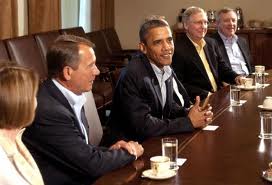 |
| Negotiations continue over debt ceiling and spending cuts |
Politics is a treacherous but ever-so-predictable business these days. What seemed within reach a few days ago to stop the insanity over debt and spending is now slipping through the cracks of the time-honored traditions of political compromise.
Personally, I favor the ideologically pure notions presented by the "Cut, Cap and Balance" idea coupled with the Lee/Hatch/Cornyn (et. al.) Balanced Budget Amendment, but now the "smart money" tells us there is no chance of passage. They wanted no increase in the debt ceiling without an up or down vote on the BBA. It's the members of the Utah congressional delegation who are leaders in the fight, specifically Hatch and Lee in the Senate and Jason Chaffetz in the House. Watch for the tea-party-dominated House to pass Cut, Cap and Balance this week, then watch it die in the Democrat-laden Senate.
The reason it isn't going to happen, apparently, is because the ideology on the other side in the personification of Barack Obama senses no urgency and wants tax increases on the rich. "We don't need a Balanced Budget Amendment," he says, "We just need to do our jobs." Well, we've all seen how that has worked out. "Doing our jobs" on his watch has included running up record debt, deficits, stimulus bills that didn't stimulate anything, the biggest entitlement program in the history of man, threats of more taxes as far and the eye can see, printing worthless currency and regulating everything that moves in the economy. They don't seem to be aware that tax increases on the wealthiest Americans just isn't enough to close the gap mathematically. If you confiscated, not merely taxed, that wealth it still wouldn't be enough. Perpetuating the myth that you can tax the rich to help the poor is what I've labeled "The Great Big Fat Lie." (Click the link to my post on April 16, 2011, and watch the embedded video).
Yes, blame Bush too -- government programs, unfunded wars, TARP, etc. -- so don't single out the criticism for Obama alone. But you can top all that history with a presidential threat just last week that Social Security recipients might not get their checks in August unless Congress comes to heel at his command. That kind of threat, first, isn't very presidential, and second, it's a big fat whopping lie.
The lies are piling up with every news conference.
Despite it all, there will be a budget spending deal along with an increase in the debt ceiling struck here in the next few days; Washington working in its "finest hour," some will yet say. However, it will be a watered down deal and the questions will remain to haunt us going forward: Will whatever they come up with satisfy the rating agencies, Moody's and S&P as being "sufficient" to stave off a downgrade of America's "AAA" bond rating? Both agencies upped the ante last week in the political poker game, by signalling they will not hesitate to degrade the rating if meaningful progress is not achieved. A downgrade in the bond rating of America would mean higher borrowing costs for everyone.
I suspect Americans, however, are growing weary of the same old rhetoric and class warfare struggles -- "tax the rich for the benefit of all who aren't." Tax revenues have been historically low these last three or four years because of the collapse of the financial markets in the wake of the toxic mortgage securitization marketplace, and this much is clear in hindsight: the federal government promoted that market and its interventions have proven catastrophic in the aftermath.
There have been reams of paper and gallons of newspaper ink spilled over whether or not to raise the debt ceiling. When he was a freshman senator from Illinois, Barack Obama assailed George W. Bush for lack of leadership in coming to Congress to raise the debt ceiling back then, and now as POTUS, Obama rides to the rescue once again proclaiming the end of the world as we know it unless he gets a big budget deal to carry him through the 2012 election. He doesn't really want to have to deal with this question of fiscal responsibility and accountability between now and then. Truth is, the Republicans voted many times under George Bush to raise the debt ceiling. The hypocrisy on both sides is stunning, and they expect Americans to keep buying their explanations? I don't think so.
In the back and forth for over two years now, one detail is seemingly lost. The President has a Constitutional duty to propose a budget each year. This president, however, has failed to do so for two and a half years, abdicating his responsibility to Congress and carping over every proposal that comes his way. John Boehner, Speaker of the House, complained the other day that negotiating with Obama is like trying to strike a deal with Jell-O; he's a little slippery and wiggly. So much for golf diplomacy.
The historic election of 2010 notwithstanding, where Obama was handed an overwhelming rebuke by the voters, political sea changes are slow in translating into reality and seemingly impossible to make stick. One thing is clear: this president thinks he's got the voters with him. He was bold enough to quote a fuzzy poll result the other day, claiming 80% of Americans favor a tax increase on the wealthy. Really? Whether it's true or not, he absolutely believes he is doing the right thing for America and the people are on his side. That's the belief of an avowed extremist, and one could say the same thing about the other end of the spectrum perhaps.
So this morning it appears likely we will see the classic result coming from Washington once again. Negotiations over political positions where both sides can claim some watered down portion of victory. Political maneuvering continues to plague our national debate. This morning it is reported Paul Ryan, the House's Budget Chief, who actually had the courage to propose a sound but politically suicidal budget a few months ago, and got it passed in the House, has been lecturing the freshmen House members about the futility of pressing their case not to raise the debt ceiling. The voters back home won't be pleased who sent them there to put a cap on the spending spree and to take away the blank checks from the president, but until there is a majority in both houses of Congress and the present occupant of the White House is expelled, there are going to be half-measures that please no one.
There are about four options that are still on the table that can be identified by their biggest supporters.
- The McConnell plan would force Barack Obama to take some very uncomfortable public positions but, policy-wise, would likely mean the fewest amount of real spending cuts.
- The plan Eric Cantor is pushing for is a short-term small-cut deal that would cut much less than the "grand bargain" and would force more debt ceiling votes and negotiations before the 2012 election.
- Barack Obama is negotiating for a medium-term cuts-and-taxes deal that would solve the issue past 2012.
- And finally, there's the John Boehner-backed "grand bargain" that would contain up to a reported $4 trillion in cuts.
The average American doesn't wake up every morning wondering whether or not the planet has been saved from a potential debt crisis in the USA. Instead, they awaken to another day oblivious to the issues their elected representatives are tasked to tackle. Even with all the angst on display in the election of 2010, it appears we're back to business as usual in Washington, and both sides are dug in until they find the partial solutions they are so adept at crafting together -- wait for it, it's coming -- "This isn't a perfect deal, but it's the best we could do under the circumstances."
There is a titanic struggle for the future unfolding before our eyes, however, that looms ahead. As anyone who carries enormous debt obligations will tell you, freedom is curtailed with debt and spending money at a rate that cannot be sustained. America has always been among the leaders in freedom in virtually every category, but we are threatened by our self-inflicted cancer of debt and deficits:
We are under siege and sometimes don't even know it or understand what's at stake. It's true for individuals, businesses and countries. We may not see the effects immediately, which is why life appears to go on as normal each day, but the underlying erosion is taking place imperceptibly but unrelentingly.
Until the political gimmickry stops and we put this federal government in a straight jacket that binds future congresses and the president to fiscal sanity, we are in bondage even if we don't see the velvet shackles binding our wrists and ankles. I remember a wise old businessman telling me years ago, "Borrowing money is like wetting the bed -- it keeps you warm for awhile, but eventually you have to get up and change the sheets."
I don't really care much for political parties and their partisan rhetoric that merely keeps them wetting the beds. As I've said before, what we need now are patriots who can rise above party and stop the insanity by changing the course of America. If we can't do it ourselves, the consequences will overtake us.
One final point: The underlying issue distills to whether we should have a larger and more expensive federal government. Over many years, federal spending has averaged about 20 percent of gross domestic product.
The Obama Democrats have raised that to 24 or 25 percent. And the president's budget projects that that percentage will stay the same or increase far into the future. The decision point has arrived at our doorstep. In the process, the national debt as a percentage of gross domestic product has increased from a manageable 40 percent in 2008 to 62 percent this year and an estimated 72 percent in 2012. And it's headed to the 90 percent level that economists Kenneth Rogoff and Carmen Reinhart have identified as the danger point, when governments face fiscal collapse. Those are the stakes and the politicians are still posturing.
I'm still waiting for the serious debate.
Tuesday, June 21, 2011
Two BIG Reasons for Economic Stagnation
When I was in a position to counsel those who were seeking for new employment opportunities, I routinely recommended they not watch the news. I warned the mainstream media is always looking for a headline to grab the attention of their followers, and frequently the news is not good on the unemployment front.
As this long and protracted recession drags on, however, it may be useful to understand some of the underlying structural reasons the economy is still staggering. I realize it's cold comfort for those still seeking employment, but there may be some legitimate reasons jobs are hard to come by regardless of their best efforts.
The most recent jobs report from the government is sobering. According to the Bureau of Labor Statistics, the unemployment rate edged up to 9.1% in May, from a level of 9.0% in April and 8.8% in March. This "jobless recovery" is a useful myth perpetuated by the administration and other like-minded politicians, but it is not a recovery until each American seeking work can be assured they have recovered. If the economy continues to stagnate, Obama will be a one-term president.
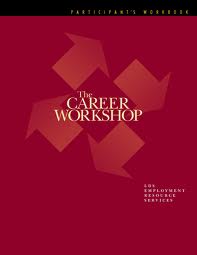 Of deepest concern to me is the number of long-term unemployed (those unemployed for 27 weeks or longer). Those numbers jumped up to 45.1% and 6.2 million in May, from 43.4% and 5.8 million in April. It proves to me that those who are being successful in their job quest are those who are following the principles taught in the Employment Resource Centers of the LDS Church. In the Career Workshop, attendees are encouraged to take control of their own job search and create their own opportunities, rather than depending upon the old ways of going about their search by sending out resumes and responding to job board listings.
In addition, registering at www.ldsjobs.org has been yielding fruit not only for job seekers, but also for employers who are finding qualified applicants in a much simpler and easier cyber-market where they can find what they are looking for. I've had the opportunity recently to teach the Career Workshop in our ward, and was reminded once again of the power of the principles outlined by the Church in the workbook for the attendees.
 What is clear to me now, after initially hoping for the best under the Obama administration's efforts to resuscitate the economy, is that their policies are deeply flawed. The federal spending per household is rocketing upward on a dangerous trajectory that must be halted.
It is reminiscent of the three government workers who gathered at the shore of a lake, each armed with a bucket. Into the lake each dropped his bucket and filled it up with water, thus lowering the level of the lake minutely. Then they marched with much fanfare around the lake to the other side, emptied their buckets back into the lake, and declared they had "stimulated" the lake by pouring the contents back into the lake. (Thanks to Grover Norquist for the visual image).
After 28 months in office, it is clear the President’s policies have failed to positively affect our economy. He has two signature pieces of domestic "achievement." His first was ObamaCare and the second was the stimulus package. Each cost something in the range of $1 Trillion, and it was all borrowed money. Even Obama admitted recently that "shovel ready" wasn't quite as shovel ready as they had initially posited.
Instead of stimulating the economy, however, these two biggest domestic spending experiments in the history of our nation have only served to exacerbate the two biggest systemic economic challenges we face as a country -- overspending and rapidly escalating debt. Rather than introducing "new money" into the economy, the administration's efforts to date have been nothing more than cost shifting from one pocket with holes in it to another.
Compounding the seriousness of the matter is that Senate Democrats haven’t passed a budget in more than two years, and couldn’t even bring themselves to vote for the President’s most recent proposal.
I'm not naive enough to believe one man can change everything all at once, but watch for Senator Mike Lee (R-UT) and others who believe as he does, to continue making the case for addressing these issues head on without apology to those who keep demanding a continuation of the status quo. Lee is leading out with a Balanced Budget Amendment proposal, seeking to hammer legislators into a spending straight jacket in the years ahead. To his credit, Orrin Hatch (R-UT) has long been an advocate for the BBA, but has never been able to push it through.
It is my judgment that the administration has ceded their leadership to others by default. Look for the emergence of new leadership, men and women who are not nearly as interested in politics as usual as they are in real solutions with apolitical consequences.
It's what we used to refer to in this country as statesmanship.
As this long and protracted recession drags on, however, it may be useful to understand some of the underlying structural reasons the economy is still staggering. I realize it's cold comfort for those still seeking employment, but there may be some legitimate reasons jobs are hard to come by regardless of their best efforts.
The most recent jobs report from the government is sobering. According to the Bureau of Labor Statistics, the unemployment rate edged up to 9.1% in May, from a level of 9.0% in April and 8.8% in March. This "jobless recovery" is a useful myth perpetuated by the administration and other like-minded politicians, but it is not a recovery until each American seeking work can be assured they have recovered. If the economy continues to stagnate, Obama will be a one-term president.
In addition, registering at www.ldsjobs.org has been yielding fruit not only for job seekers, but also for employers who are finding qualified applicants in a much simpler and easier cyber-market where they can find what they are looking for. I've had the opportunity recently to teach the Career Workshop in our ward, and was reminded once again of the power of the principles outlined by the Church in the workbook for the attendees.

It is reminiscent of the three government workers who gathered at the shore of a lake, each armed with a bucket. Into the lake each dropped his bucket and filled it up with water, thus lowering the level of the lake minutely. Then they marched with much fanfare around the lake to the other side, emptied their buckets back into the lake, and declared they had "stimulated" the lake by pouring the contents back into the lake. (Thanks to Grover Norquist for the visual image).
After 28 months in office, it is clear the President’s policies have failed to positively affect our economy. He has two signature pieces of domestic "achievement." His first was ObamaCare and the second was the stimulus package. Each cost something in the range of $1 Trillion, and it was all borrowed money. Even Obama admitted recently that "shovel ready" wasn't quite as shovel ready as they had initially posited.
Instead of stimulating the economy, however, these two biggest domestic spending experiments in the history of our nation have only served to exacerbate the two biggest systemic economic challenges we face as a country -- overspending and rapidly escalating debt. Rather than introducing "new money" into the economy, the administration's efforts to date have been nothing more than cost shifting from one pocket with holes in it to another.
 |
| Senator Mike Lee (R-UT) |
I'm not naive enough to believe one man can change everything all at once, but watch for Senator Mike Lee (R-UT) and others who believe as he does, to continue making the case for addressing these issues head on without apology to those who keep demanding a continuation of the status quo. Lee is leading out with a Balanced Budget Amendment proposal, seeking to hammer legislators into a spending straight jacket in the years ahead. To his credit, Orrin Hatch (R-UT) has long been an advocate for the BBA, but has never been able to push it through.
It is my judgment that the administration has ceded their leadership to others by default. Look for the emergence of new leadership, men and women who are not nearly as interested in politics as usual as they are in real solutions with apolitical consequences.
It's what we used to refer to in this country as statesmanship.
Tuesday, April 5, 2011
Who Are The "Extremists?"
The Washington blame game over the budget continues, including the Democrat Senate caucus giving instruction to Senator Charles Schumer (D-NY) to keep referring to the Tea Party as "extremists," and the conservative Republicans trying to rein in the profligate spending. It's making politics a rousing game with lots of sharp elbows being thrown these days.
Today, Paul Ryan (R-WI) the Congressional Budget Committee Chair rolled out his version of the 2012 fiscal year budget that finally gets serious about budget cuts. He's calling for $6.2 TRILLION in cuts in the next few years, while the Democrats continue to bump along reluctantly agreeing to tens of billions. I'm not one who believes the Republicans are blameless in amassing the debt, but I'm expecting them to lead the way in reducing it.
I have a pretty good idea who's listening to the electorate and who's not.
Meanwhile, the present occupant of the White House officially announced that he's running for re-election (just in case there's anyone out there who might be entertaining thoughts he isn't). Time Magazine offers five reasons why he's unbeatable, and will easily win re-election. The rumors are that he will spend over $1 billion in the next nineteen months, making it the most expensive run for the presidency in the history of the Republic. The willingness without reservation to spend that much on the race should give pause to anyone who seriously thinks this is a president who is taking his job seriously. The battle lines could not be more clearly drawn than they are right now.
Here's an enlightening interview with Mike Lee (R-UT) on Fox News the other night -- you be the judge about who's being the extremist here. And here's another interesting look at the uneasy truce and working relationship over the Balanced Budget Amendment between Utah's two senators, Hatch and Lee from Politico. Hatch could claim he's been at this thing since Mike was in diapers, and he'd be right, but Hatch is the insider's insider and viewed with suspicion among Utah's conservative base, even after his long track record (36 years) in the Senate.
Is Hatch part of the problem of old-Washington politics that put us here in the first place, or is he really a pea in the same conservative pod as Mike Lee? It's Hatch who has to define himself, interestingly, not newcomer Mike Lee. To date Mike is withholding his endorsement of Hatch. Wise move. After a viable replacement candidate surfaces and the Republican nominating process plays out at convention next spring, we may well understand why Mike is so reluctant to endorse Hatch now. Let's all keep the powder dry until we see who pops up on the horizon to oppose Hatch.
I'm thinking Mike Lee and Paul Ryan are about as mainstream as it gets. The more they speak, the less extreme they seem. These are guys who are serious about putting the squeeze on spending for a monstrosity federal government. It's still not too late to begin downsizing, but it will take an iron political will fueled and forged in the furnace of affliction by the people.
If you think it's extreme to put America on a fiscally reckless path at breakneck speed leading toward a bankrupt precipice then re-elect Obama.
If, on the other hand you want to side with the "extremists" who are trying to put this country back on track, then make other plans.
I know where I stand, do you know where you stand?
 |
| Congressman Paul Ryan (R-WI) |
I have a pretty good idea who's listening to the electorate and who's not.
Meanwhile, the present occupant of the White House officially announced that he's running for re-election (just in case there's anyone out there who might be entertaining thoughts he isn't). Time Magazine offers five reasons why he's unbeatable, and will easily win re-election. The rumors are that he will spend over $1 billion in the next nineteen months, making it the most expensive run for the presidency in the history of the Republic. The willingness without reservation to spend that much on the race should give pause to anyone who seriously thinks this is a president who is taking his job seriously. The battle lines could not be more clearly drawn than they are right now.
 |
| Senator Mike Lee (R-UT) |
Is Hatch part of the problem of old-Washington politics that put us here in the first place, or is he really a pea in the same conservative pod as Mike Lee? It's Hatch who has to define himself, interestingly, not newcomer Mike Lee. To date Mike is withholding his endorsement of Hatch. Wise move. After a viable replacement candidate surfaces and the Republican nominating process plays out at convention next spring, we may well understand why Mike is so reluctant to endorse Hatch now. Let's all keep the powder dry until we see who pops up on the horizon to oppose Hatch.
I'm thinking Mike Lee and Paul Ryan are about as mainstream as it gets. The more they speak, the less extreme they seem. These are guys who are serious about putting the squeeze on spending for a monstrosity federal government. It's still not too late to begin downsizing, but it will take an iron political will fueled and forged in the furnace of affliction by the people.
If you think it's extreme to put America on a fiscally reckless path at breakneck speed leading toward a bankrupt precipice then re-elect Obama.
If, on the other hand you want to side with the "extremists" who are trying to put this country back on track, then make other plans.
I know where I stand, do you know where you stand?
Subscribe to:
Posts (Atom)